
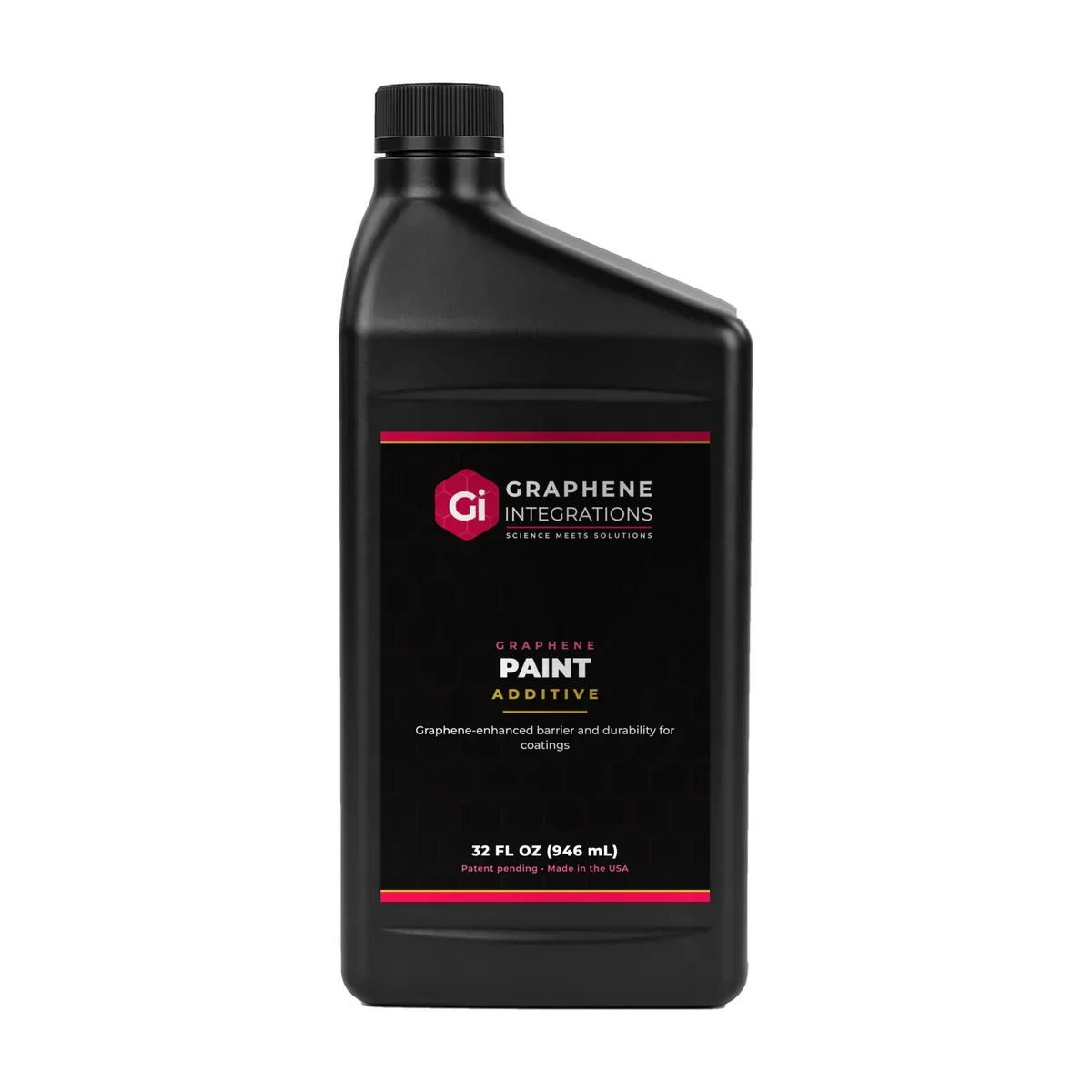
Shop: see sizes, SKUs and the spec sheet for the graphene additives in our store, or browse all graphene products.
Graphene additives are now sold for almost every material, from paint and motor oil to plastics, rubber, textiles and batteries. Choosing one can be confusing, because "graphene" covers many different materials and an additive is only as good as its dispersion. This guide explains how to choose a graphene additive for your application, what to ask a supplier, and how our range of graphene additives is organised. For background on how they are used, read how graphene additives are used in manufacturing.
What is a graphene additive?
A graphene additive is a product that brings graphene into another material at a low dose, the way a pigment or a reinforcing filler does. The graphene is the active part. The carrier around it decides whether it mixes into your product cleanly.
Why a pre-dispersed liquid beats powder. Dry graphene powder is light and dusty, hard to wet out, and its flakes tend to clump back together. Clumps act like defects, so a powder can make a product worse instead of better. Our graphene additives are supplied as liquids with the flakes already separated in a carrier matched to your system, so they mix in with the equipment you already run and there is no fine dust to manage. We never sell powder.
Dosing. Our graphene additives are typically used at 1% to 7% by weight, depending on the job. More is not automatically better, so a trial should bracket two or three doses.
Trialing. Compare against a baseline you already make, change only the additive dose, and run the tests your customers use. Our guide on how to run a graphene additive trial and our guide to choosing a graphene additive go into more detail.
Step 1: Start from your material and the property you want
The first question is not "which graphene" but "which material, and what should change". A coating formulator may want better barrier and corrosion protection. An oil blender may want lower wear. A rubber compounder may want abrasion resistance. Each of those needs a different carrier, a different addition point and a different test. Write down your base material, your current formula and the one or two properties you want to move before you talk to any supplier.
Step 2: Match the carrier to your system
A graphene additive has to mix into your product without upsetting it. That means the carrier must be compatible: water for waterborne systems, solvent for solvent-borne coatings, resin for plastics, filament and many coatings, and oil for lubricants. Our Graphene Motor Oil Additive, for example, uses Sylfat™ tall oil fatty acid (Kraton) as its carrier. Read more in how to choose the right carrier.
Step 3: Ask about quality and specifications
Ask what kind of graphene is in the additive, how many layers, what flake size, and how the supplier checks it. Our guide to graphene quality specifications explains the terms. Also ask whether the product contains carbon black. Ours does not.
Step 4: Plan the dose and the trial
Most of our graphene additives are used at 1% to 7% by weight, depending on the job. Bracket two or three doses against a baseline, keep everything else the same, and test the properties your customers care about. Our guide on how to run a graphene additive trial walks through it.
Step 5: Check the evidence behind any claim
Be careful with big numbers that do not say how they were measured. We publish only results from real tests. In independent testing at Univar's Houston lab, our graphene lubricant chemistry gave up to 42% less wear and a 26% higher weld load. Our Graphene Concrete Additive gave 67.7% higher compressive strength at 5% by weight of cement in independent third-party testing. For other applications we do not publish numbers, and results are measured against the customer's own formulation.
Our graphene additives by application
Each additive below is pre-dispersed in a carrier for its application. Start with the guide for your material, then go to the store page for sizes, SKUs and the spec sheet.
- Graphene Paint Additive: paints, primers and protective coatings. guide
- Graphene Motor Oil Additive: gasoline and diesel engine oils. guide
- Graphene Gear Oil Additive: industrial and automotive gear oils. guide
- Graphene Hydraulic Fluid Additive: hydraulic fluids for pumps and valves. guide
- Graphene Grease Additive: bearing and chassis greases. guide
- Graphene Coolant Additive: chillers, engine cooling and process loops. guide
- Graphene Concrete Additive: concrete and precast. guide
- Graphene Plastic Additive: thermoplastic and thermoset compounds. guide
- Graphene Rubber Additive: tire, belt, hose and seal compounds. guide
- Graphene Adhesive Additive: adhesives, sealants and potting compounds. guide
- Graphene Battery Additive: battery electrode slurries and cell R&D. guide
- Graphene 3D Printing Filament Additive: PLA, PETG, ABS and nylon filament. guide
- Graphene Textile Additive: fabric finishes, coatings and fiber. guide
You can also browse all graphene products in the store or the graphene products overview.
Frequently asked questions
What is a graphene additive?
A product that adds graphene to another material, such as paint, oil, plastic or rubber. Ours are graphene pre-dispersed in a liquid carrier matched to the application.
How do I choose a graphene additive?
Start from your material and the property you want to change, match the carrier to your system, check the graphene specifications, and run a dosed trial against your baseline.
How much graphene additive should I use?
Most of our graphene additives are used at 1% to 7% by weight, depending on the job.
Why liquid instead of powder?
Dry graphene powder is dusty and hard to disperse. A pre-dispersed liquid arrives with the flakes already separated, so it mixes with normal equipment.
Where can I buy graphene additives?
All of our graphene additives are listed in our store. Pricing and samples are by quote.
Get the graphene additives
Ready to test graphene in your own product? Go to the graphene additives store page for sizes, SKUs, the spec sheet and SDS, or browse the full graphene store. Pricing and samples are by quote. Call 704-659-3682 or request a quote, samples or a spec sheet / SDS.


