
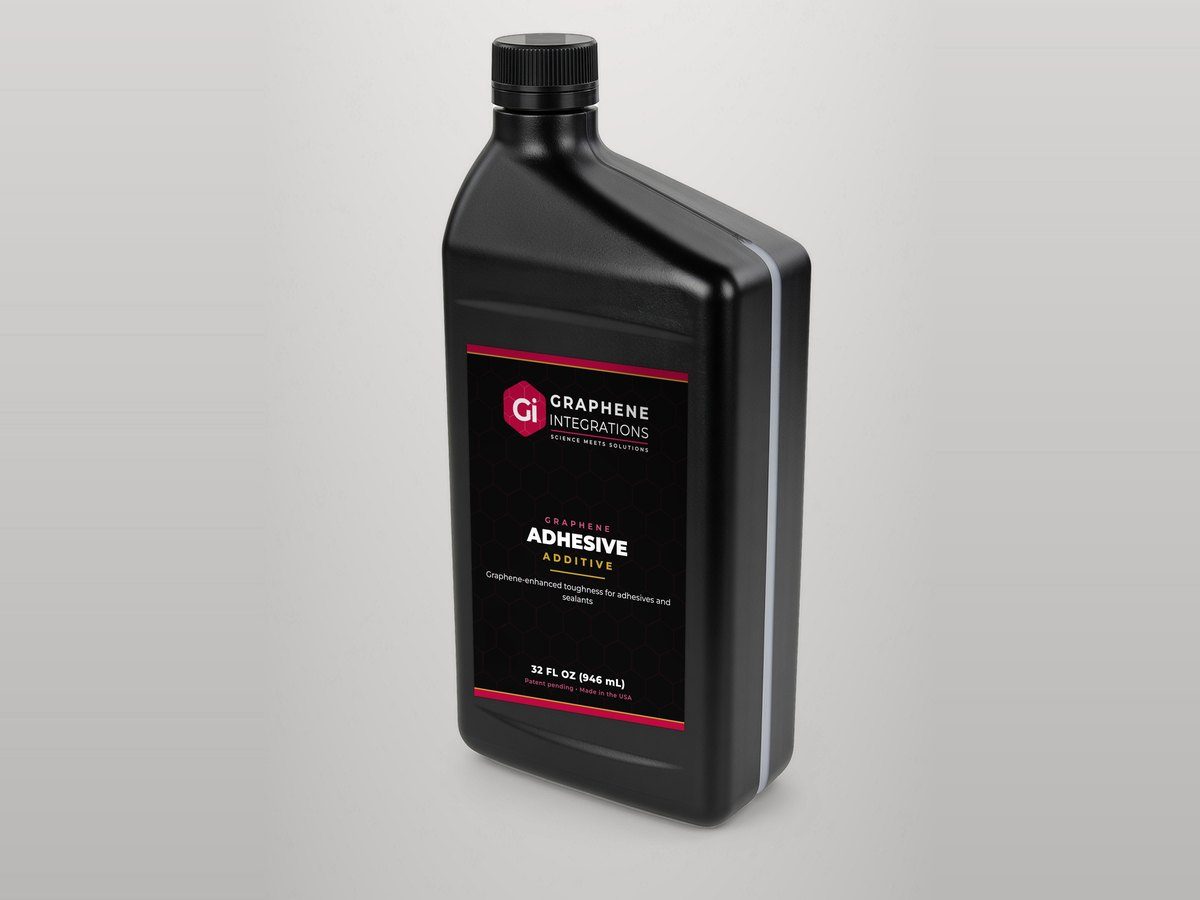
Adhesive formulators look at graphene for two different jobs. One is mechanical: tougher, stronger structural bonds. The other is thermal: potting compounds and thermal adhesives that move heat away from electronics. This article covers both, explains how our Graphene Adhesive Additive is supplied for epoxy, polyurethane and acrylic systems, and sets out how to test it properly.
Why graphene in an adhesive
Mechanical performance
Graphene is among the strongest materials ever measured as a single sheet (Lee et al., Science, 2008). In an adhesive, thin flakes spread through the cured resin can interact with growing cracks, which is one mechanism researchers study for toughening brittle thermosets such as epoxies. The effect depends heavily on dispersion and loading.
Thermal performance
Graphene's very high thermal conductivity in single-layer form was first measured by Balandin and colleagues (Nano Letters, 2008). In a potting compound or thermal adhesive, the aim is to help the cured material conduct heat better than the unfilled resin. Thermal performance in a composite depends on how the flakes connect, so loading and dispersion matter here too.
Both are things graphene is designed to help with. We do not publish performance numbers for adhesives; each trial is run against the customer's baseline bond.
What the additive is
- Carrier: resin or solvent dispersion matched to the adhesive system.
- Chemistries: epoxy, polyurethane and acrylic adhesives, sealants and potting compounds.
- Dose: 1% to 7% by weight, depending on the job.
- Status: patent pending, made in the USA in Charlotte, NC, no carbon black, never sold as a powder.
Because the graphene is already dispersed, there is no dry powder to wet out. For a two-part epoxy, the additive is usually mixed into the resin side before the hardener is added.
Formulation watch points
- Viscosity: any filler can thicken a system. Check viscosity and dispensing behaviour, especially for cartridge and meter-mix products.
- Pot life and cure: measure gel time and cure profile after adding the additive.
- Electrical properties: graphene conducts electricity. For potting compounds that must also insulate, measure volume resistivity and dielectric strength on the cured compound. Do not assume a thermally improved compound is still an insulator.
- Colour: graphene is black.
How to test it
- Choose a baseline product with known bond and cure data.
- Make two or three loadings within 1% to 7%, mixed the same way.
- Prepare substrates consistently. Surface preparation drives adhesive results more than almost anything else. Use the same abrasion, cleaning and primer for every specimen.
- Run lap shear. Single-lap shear on metal substrates is the most common first test; ASTM D1002 is the usual method for metal-to-metal joints.
- Run peel or impact if toughness matters to your application.
- Run thermal tests for potting and thermal adhesives: thermal conductivity of the cured compound, plus electrical insulation checks.
- Age some specimens. Humidity, temperature cycling or fluid exposure, whichever your customers specify.
- Look at failure mode. Cohesive versus adhesive failure tells you as much as the number.
What we do not claim
We do not claim lap-shear strength, toughness, thermal conductivity or service life numbers for adhesives made with our additive, and we have no customer case studies to share. The only claims that matter are the ones your test lab backs up.
"An adhesive is only as good as the joint it holds together, so the lap-shear rig gets the last word." — Frans Alkemade
Choosing where to start
If you make several adhesive products, start with the one where the property you want matters most and where you have the cleanest baseline data. For toughening, a two-part structural epoxy with known lap-shear and peel results is a good candidate. For thermal work, a potting compound with measured thermal conductivity and insulation data is a sensible start. Avoid starting with a product that is already at its limit for viscosity or dispensing, since any filler adds to that.
Scale-up
Once a lab formula looks promising, make a pilot batch on production equipment and repeat the key tests. Check shelf life of the filled resin side, since settling in a finished adhesive cartridge is a different question from settling in our container. Keep retained samples from each batch.
Related reading
See how to choose a graphene dispersion carrier, our guide for plastics and thermosets, and graphene in aerospace.
Read the adhesive additive press release, see the graphene in resins and composites page, or request a quote and samples.
Frequently asked questions
Why add graphene to epoxy?
It is studied for toughening structural bonds and for improving heat conduction in potting compounds and thermal adhesives. Results depend on loading and dispersion.
Will graphene make my potting compound conductive?
It can affect electrical properties. Measure volume resistivity and dielectric strength on the cured compound if it must insulate.
How much graphene adhesive additive do I use?
1% to 7% by weight, depending on the job, in a resin or solvent carrier matched to your system.
Do you publish lap-shear results?
No. Each trial is run against the customer's baseline bond in their own lab.
Which side of a two-part epoxy gets the additive?
Usually the resin side, mixed in before the hardener is added. Check viscosity and pot life afterwards.
Request a quote, samples or a spec sheet
Tell us your material, the property you want to improve, the carrier you use (water, solvent, resin or oil) and your volumes. Pricing and samples are by quote. Call 704-659-3682 or request a quote, samples or a spec sheet / SDS.


