
Press release
Pre-dispersed in a water or solvent carrier matched to the slurry process, the additive is designed for battery developers evaluating graphene in electrodes.
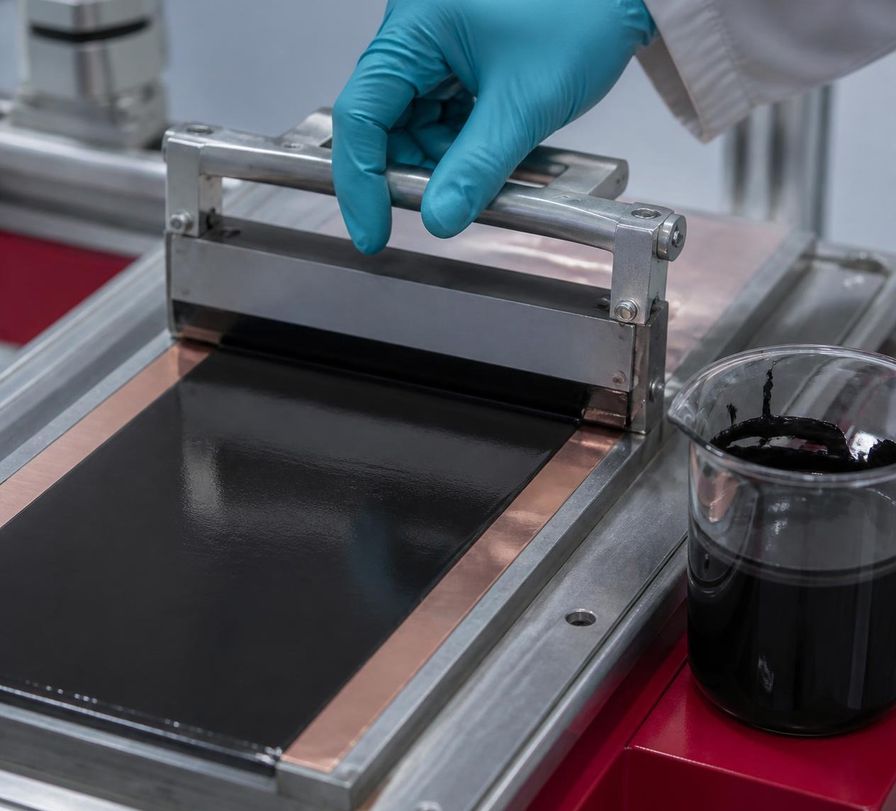
CHARLOTTE, NC — October 23, 2026 — Graphene Integrations today introduced its Graphene Battery Additive for battery electrode development. The additive is supplied pre-dispersed for slurry mixing and is aimed at R&D teams and pilot lines working on lithium-ion and other battery chemistries.
Why graphene in an electrode
Graphene is known for high electrical conductivity, and researchers have studied it as a conductive additive that can help electrons move through an electrode. The Graphene Battery Additive is designed to let developers explore that in their own electrode formulations. It is a development material: Graphene Integrations does not publish capacity, cycle-life or charging claims, and every result is measured against the customer's current electrode.
“Battery work is careful work, and nobody should take a supplier's word for what happens inside a cell. We give R&D teams graphene that's already dispersed for their slurry, made in America, and they build the cells and gather the data.”
Fits the slurry step
Good dispersion is critical in an electrode slurry, so the graphene arrives pre-dispersed in a water or solvent carrier matched to the customer's slurry process. It is added during slurry mixing at 1% to 7% by weight, depending on the job, and the team suggests a starting point for each trial. Teams then coat, dry and build cells as they normally would.
Supply
The additive is available in 32 fl oz bottles for lab work and 1 gallon jugs for pilot runs. A technical data sheet is available. It is patent pending, made in the USA and contains no carbon black, and the graphene is never sold as a dry powder.
Request a quote Learn about graphene in energy storage →
About Graphene Integrations
Graphene Integrations is a US graphene manufacturer in Charlotte, NC, making graphene-enhanced additives for coolants, lubricants, concrete and coatings. The company makes graphene and supplies it pre-mixed in water, solvents, resins and oils, never as a dry powder, so manufacturers can add it to products and processes they already run. Its products are patent pending and made in the USA. Learn more about Graphene Integrations.
Media contact
Frans Alkemade
CEO, Graphene Integrations
sales@grapheneintegrations.com
+1 (704) 659-3682
###
Evaluate the electrode before the battery claim
Graphene is investigated as a conductive network within an electrode, not as a replacement for all its active chemistry. Published cathode research links a specific graphene coating architecture to electron and ion transport; that electrode design and its performance are not GI additive results.
Set the supplied-additive dose on a clearly defined dry-solids basis, accounting separately for its carrier. Hold active material, binder, coating thickness, loading and compaction comparable. Measure slurry processing, conductivity, impedance, rate capability, cycle retention and safety using the intended cell chemistry.
Potential resource benefits must follow a cell that meets the same duty and safety requirements. Compare delivered energy over demonstrated service, manufacturing yield, drying energy, electrolyte and other materials, transport and end-of-life. Faster charging or better conductivity alone does not demonstrate a longer-lived or lower-carbon GI battery.
Research / measurement reference · Continue with the application guide