


Graphene Adhesive Additive
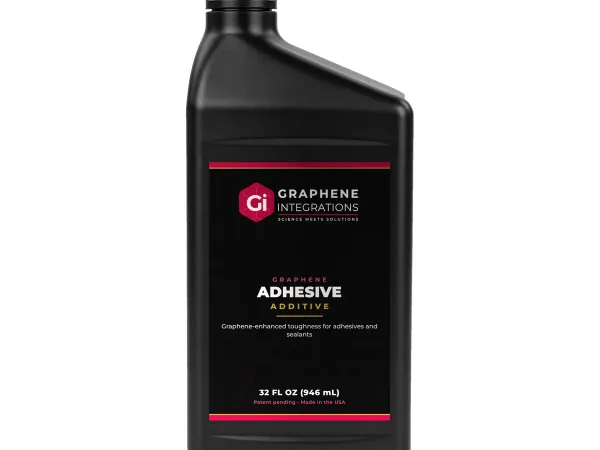
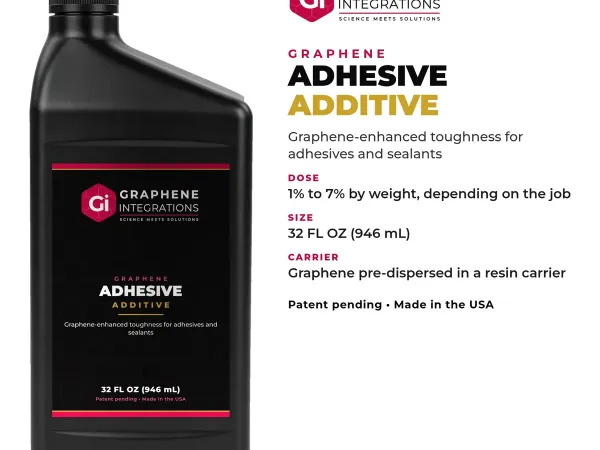
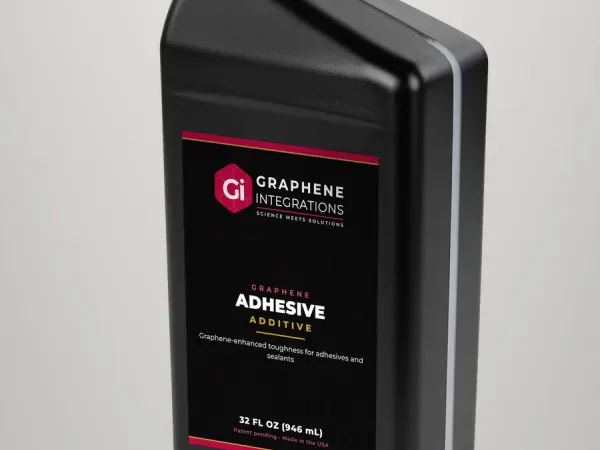
A graphene additive for adhesives and sealants, pre-dispersed in a resin or solvent carrier.
- Category
- Coatings & Adhesives
- Application
- Epoxy, polyurethane and other structural adhesive and sealant systems, tested against your baseline bond.
- Carrier
- Resin or solvent dispersion matched to your adhesive system.
- Typical dose
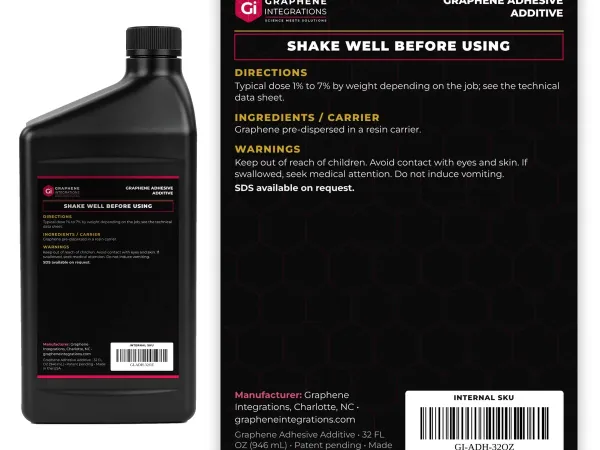
- 1–7% by weight, depending on the application. See the technical data sheet.
- SKU
- GI-ADH-32OZ (32 fl oz bottle)
GI-ADH-1GAL (1 gal jug)
GI-ADH-5GAL (5 gal pail)
Sizes: 32 fl oz bottle, 1 gal jug, 5 gal pail
Request a quote for pricing, lead time and the right dose for your job.
Downloads
Patent pending. Made in the USA. Manufacturer: Graphene Integrations, Charlotte, NC.
About this additive
Structural adhesives join metals, composites and plastics. Graphene is studied in adhesive resins for bond and mechanical properties. We supply it already dispersed in the resin or solvent your system uses. Related: graphene in coatings and graphene in resins and composites.
Benefits are evaluated in your formulation, against your own baseline. We suggest a starting dispersion, supply samples by quote, and you test against your current material. See graphene dispersions for the carriers we work with.
Evaluate the joint, not just the additive
Graphene can be investigated for stress transfer and thermal or electrical pathways in polymer systems. Published epoxy research highlights the importance of the filler–matrix interface; its modified graphitic materials and results are not specifications for GI adhesive formulations.
Match the supplied carrier and dose to your resin chemistry. Hold the bond-line thickness, substrate preparation and cure conditions constant while comparing lap shear, peel or fracture behavior, pot life and thermal cycling. Check whether the carrier affects cure stoichiometry or application viscosity.
A resource-efficient joint must deliver the required function over its service duty. Record actual adhesive use, process scrap, cure energy, repair needs and disassembly or recycling constraints. Include additive and carrier impacts in any lifecycle comparison; a stronger coupon alone does not establish longer field life or a CO₂ reduction.
Research / measurement reference · Continue with the application guide
Frequently asked questions
What improvement should I expect?
We do not publish general adhesive results. Benefits are evaluated in your formulation, against your own baseline bond.
Which adhesive chemistries does it suit?
It is dispersed in a resin or solvent matched to your system, such as epoxy or polyurethane; we confirm the fit before samples.
Is the graphene supplied as a powder?
No. It is supplied pre-dispersed in a carrier, never as dry powder.
How much should I add?
Typical dose: 1–7% by weight, depending on the application. See the technical data sheet.
More in Coatings & Adhesives
-

Graphene Paint Additive
A graphene additive for paints and coatings, pre-dispersed in the carrier your formulation uses. View product -

Graphene Motor Oil Additive
A graphene additive for motor oils, supplied pre-mixed in an oil-based carrier so it blends straight into your oil. View product -

Graphene Gear Oil Additive
A graphene additive for gear oils, pre-mixed in an oil-based carrier for heavily loaded gear contacts. View product -

Graphene Hydraulic Fluid Additive
A graphene additive for hydraulic fluids, pre-mixed in an oil-based carrier for pumps, valves and cylinders. View product -

Graphene Grease Additive
A graphene additive for greases, pre-mixed in an oil-based carrier for blending into bearing and industrial greases. View product -

Graphene Coolant Additive
A graphene additive for liquid cooling loops, supplied pre-mixed in a water-based carrier. View product