
Press release
At 5% by weight of cement, the graphene concentrate increased compressive strength by 67.7% and water resistance by 25% in independent third-party testing in 2023.
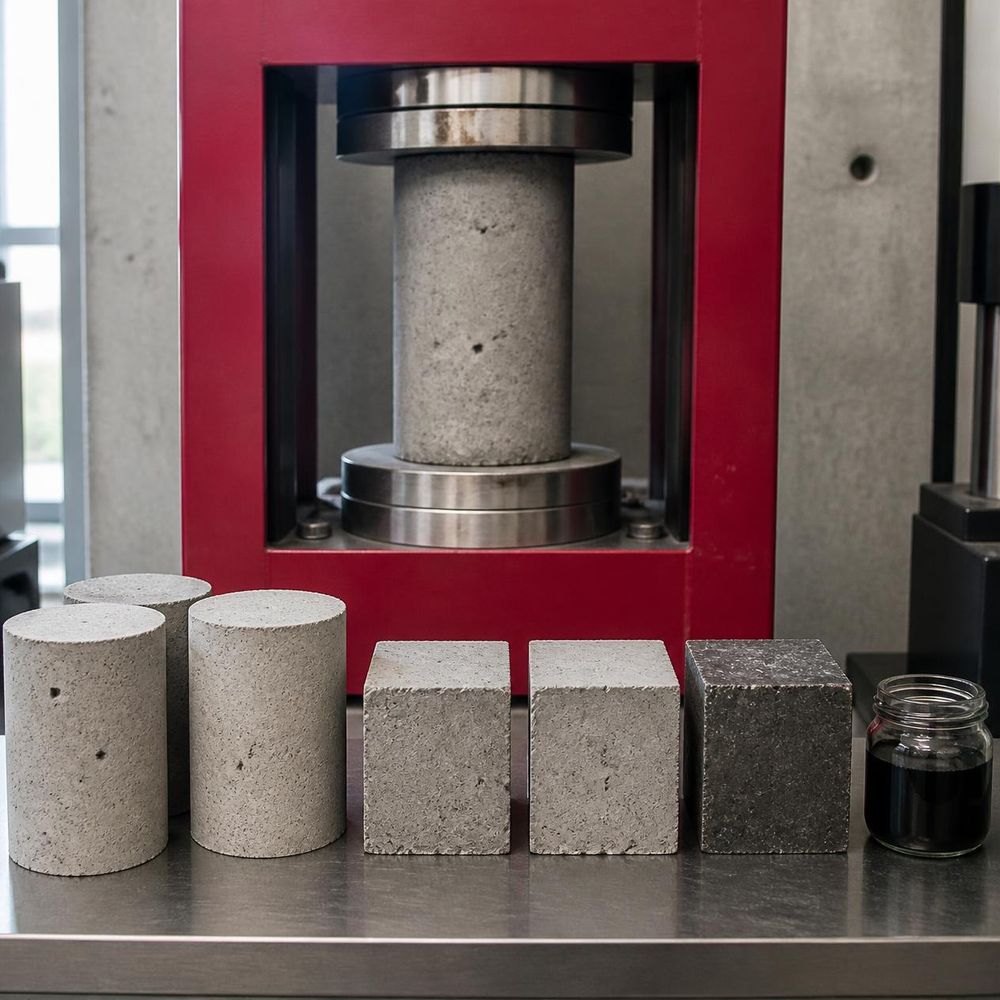
CHARLOTTE, NC — July 4, 2023 — Graphene Integrations has introduced a graphene concrete additive. In independent third-party testing in 2023, adding the graphene concentrate at 5% by weight of cement increased concrete compressive strength by 67.7%.
Ready to add
The additive is supplied ready to add, so it fits into existing batching and mixing. Results depend on the cement, aggregates, water-cement ratio and curing, so Graphene Integrations tests with each concrete producer in its own mix.
“A 67.7% gain in compressive strength at 5% by weight of cement is a strong result in independent third-party testing in 2023. The next step is proving it in our customers' own mixes, project by project.”
What the results mean
Higher compressive strength may give designers more options. Any change to a mix design, or to the amount of concrete used, should be confirmed by the project engineer with testing on that mix. Concrete with 5% graphene also increased water resistance by 25%. Long-term field durability still has to be shown project by project.
How a producer can test it
Producers start with a baseline mix design they already use. Graphene Integrations suggests a starting dose and quotes R&D samples. Test specimens are then cast with and without the additive, using the same materials, water-cement ratio and curing, and strength and water uptake are compared at the ages the producer normally tests. The results go to the project engineer before any design is changed. Graphene is supplied already dispersed in the liquid concentrate, so there is no dry graphene powder to handle. Mixing, storage and safety instructions are on the spec sheet and SDS supplied with the product.
What is not claimed
Graphene rebar is a separate effort that is in development. It is not a product yet, and no performance claims are made about it.
See the graphene concrete additive page, read how the additive works and what we tested, or request samples or a spec sheet.
Request a quote Learn about the graphene concrete additive →
About Graphene Integrations
Graphene Integrations, formerly Graphene America, is a US graphene manufacturer based in Charlotte, NC. The company makes graphene and supplies it pre-mixed in water, solvents, resins and oils, never as a dry powder, so manufacturers can add it to products and processes they already run. Its products are patent pending and made in the USA. Learn more about Graphene Integrations.
Media contact
Frans Alkemade
CEO, Graphene Integrations
sales@grapheneintegrations.com
+1 (704) 659-3682
###
Concrete strength and embodied carbon
Cement is the binder in concrete. Its production releases CO₂ through limestone conversion and energy use, as explained by the IEA. That makes cement quantity an important part of a concrete carbon assessment.
GI’s additive achieved +67.7% compressive strength in third-party testing at the tested 5% supplied-additive dose by cement weight, not 5% pure graphene. This validated strength result supports investigating lower-cement mixes; it does not establish how much cement can be removed. Candidate mixes must meet the same required performance.
Conditional example: if 100 kg of Portland cement is actually avoided at the same required performance, gross avoided cement A1–A3 impact is 100 × 0.919 = 91.9 kg CO₂e. The 100 kg is an example assumption, not a reduction demonstrated by GI. The official US industry-average Portland cement EPD, revised July 2026, Table 4, gives 0.919 kg CO₂e/kg using 2019 production data, covering A1–A3, raw materials through manufacturing—not a current-year plant measurement or whole-life concrete footprint. CO₂e means carbon dioxide equivalent.
This is gross avoided cement-production impact, not measured GI net savings. Net savings require matched-performance mix validation and a consistent lifecycle comparison including additive manufacture, carrier, packaging, transport and all changed mix inputs. Unknown additive impacts are not zero. The strength result does not automatically establish cement reduction, longer service life or carbon capture.