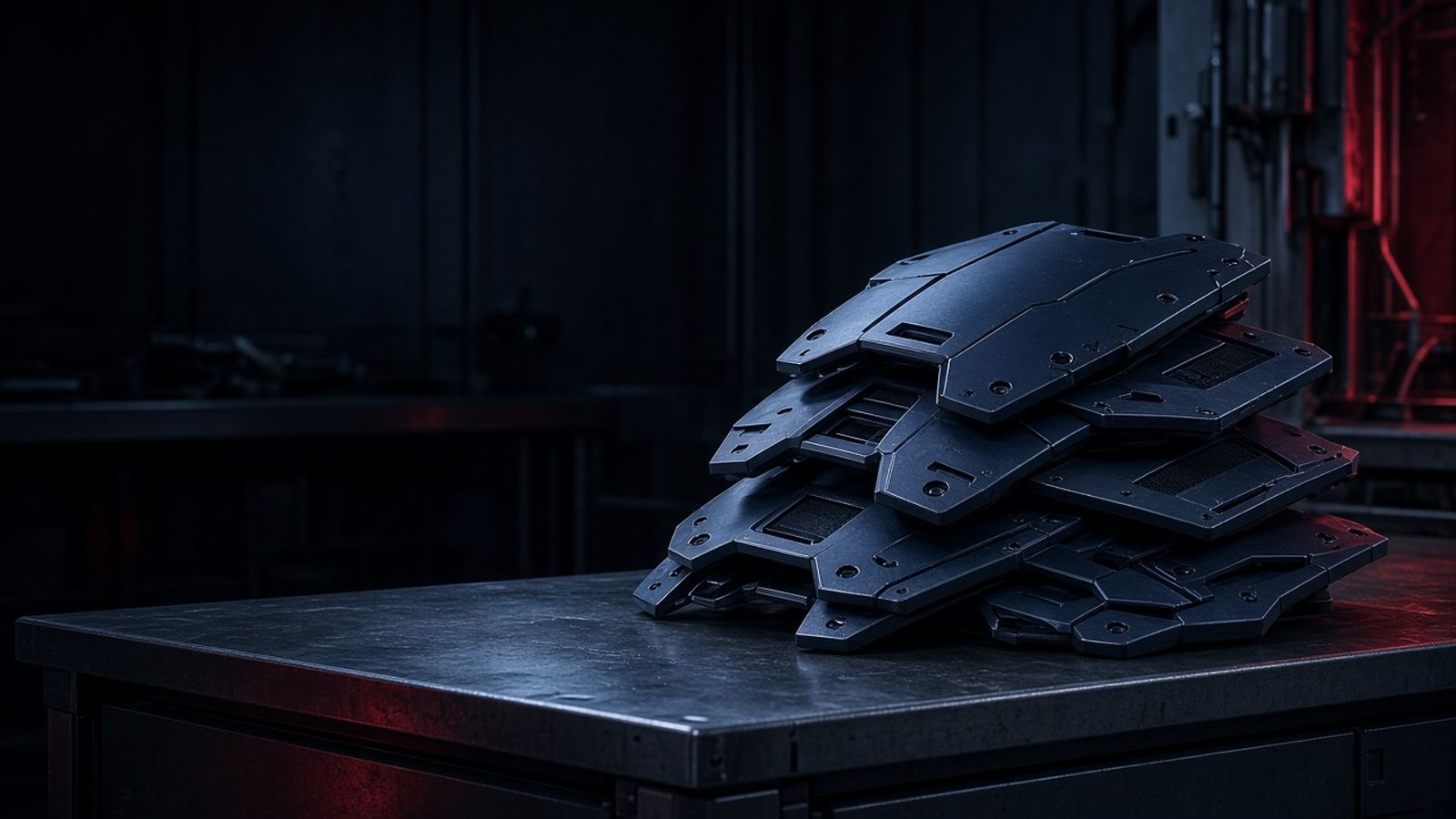
Stacked composite armor plates on a workbench, where graphene composites add strength

Graphene in Defense

Defense applications need materials that are strong and light, and that hold up in harsh conditions. Working with AARG, we developed graphene-integrated polymers and composites that were evaluated with V50 ballistic testing at NTS Chesapeake. We have not published V50 numbers and make no claims about protection levels; any armor product must meet the standards that apply to it.

See graphene in the military, graphene armor composites and the press release. Below are the articles and projects in this category. Graphene is sold only pre-dispersed in a carrier, and pricing and samples are by quote: request a quote or samples.

Match material performance before claiming material efficiency

Graphene offers a route to investigate reinforcement and thermal or electrical networks in a polymer. Primary epoxy research shows how matrix interaction and filler structure affect performance; different grades, polymers and processing cannot be assumed to reproduce those results.

Potential material efficiency requires a design that meets the same requirements—not simply a stronger coupon. Track accepted-part mass, production yield, processing energy and repair or replacement, then include additive, carrier, transport and end-of-life. Improved material properties alone do not establish lightweighting, recyclability or a measured GI carbon saving.

Research / measurement reference · Continue with the application guide

Graphene Manufacturing Made in America

Graphene has remarkable properties in the lab, but it only helps a product when it is evenly mixed into the material. Getting that mixing right is the hard part, and it is what we focus on at Graphene Integrations.

What we do

We make graphene and infuse it into the liquids manufacturers already use: water, solvents, resins and oils. Customers get ready-to-use graphene dispersions, concentrates and additives that fit into their existing processes, instead of a dry powder that is hard to handle and mix.

Made in the USA

Our operation, from research and development to production, is in the USA, based in Charlotte, North Carolina. Keeping it in one place lets us control quality from the graphene to the finished dispersion, and work closely with US manufacturers on samples, testing and scale-up.

Graphene in Aerospace

Aerospace is always trying to save weight without giving up strength, durability or safety. Graphene is studied as a small addition to the polymers and composites that aircraft already use.

Our aerospace polymer work

Working with Advanced Armor Research Group (AARG), we developed graphene-integrated polymers and composites. They were evaluated with V50 ballistic testing at the NTS Chesapeake ballistic and materials testing facility in Belcamp, MD. Read the aerospace polymers press release and see graphene in commercial aerospace.

Why Graphene Technology, Innovation and Applications?

Graphene is a single layer of carbon atoms arranged in a hexagonal, honeycomb lattice. It was first isolated in 2004 by Andre Geim and Konstantin Novoselov, work that earned them the 2010 Nobel Prize in Physics. Since then it has become one of the most studied materials in science.

Graphene Armor Composites

Title
Graphene Armor Composites

Graphene Armor Composites

Armor needs to stop threats while staying light enough to wear or carry. Graphene is studied as a small addition to the polymers and fiber composites used in armor, with the aim of equal protection at lower weight. Learn more about graphene and its properties.

Graphene in the Military

Defense applications need materials that are strong and light, and that hold up in harsh conditions. Graphene is studied as an addition to the polymers, fibers and composites used in protective gear, vehicles and equipment.

Graphene in Energy Storage

Title
Graphene in Energy Storage

Graphene is one of the most researched materials for batteries and supercapacitors. We supply graphene already dispersed in water, solvents and resins, so battery and capacitor developers can test it in their own electrode formulations.

Subscribe to Defense