
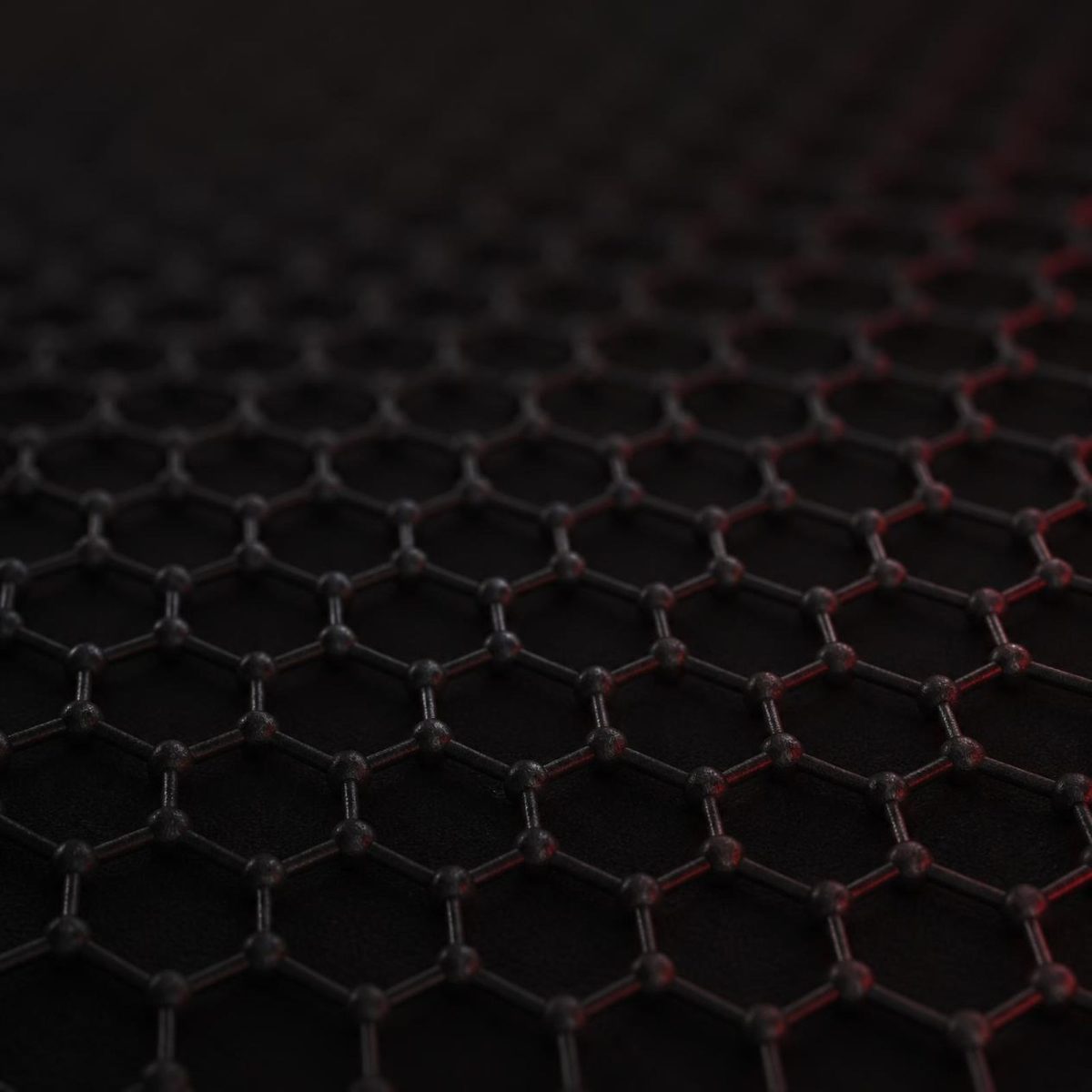
The word "graphene" is used for a wide range of materials. Some are genuinely a few atoms thick. Others are closer to very fine graphite. Two products sold under the same name can behave very differently in your process. This article explains, in plain terms, the main properties used to describe graphene quality, how they are measured and what to ask for. It complements our list of 10 questions to ask a graphene supplier.
Why standards matter
Standards bodies have worked to make graphene terms and measurements consistent. ISO/TS 80004-13 defines vocabulary for graphene and related two-dimensional materials, including terms such as few-layer graphene and graphene nanoplatelets. ISO/TS 21356-1 sets out methods for structural characterisation of graphene from powders and dispersions. Using these terms in a specification helps both sides mean the same thing.
The key properties
1. Number of layers
Single-layer graphene is one atom thick. As layers stack, properties gradually move toward those of graphite. Material described as few-layer graphene has a small number of stacked layers; thicker stacks are often called graphene nanoplatelets. For additives, what matters is the distribution: what share of the material is in the thin range.
2. Lateral size
Lateral size is how wide a flake is, as opposed to how thick. It affects how flakes overlap, how well they form networks for conduction and barrier, and how they behave in a dispersion. Very large flakes can be harder to keep dispersed; very small ones may not bridge as well.
3. Aspect ratio
Aspect ratio combines the two: lateral size divided by thickness. High aspect ratio, wide and thin, is generally what makes graphene effective as a reinforcing or barrier additive at modest loadings.
4. Raman spectroscopy
Raman spectroscopy shines a laser on the sample and reads the scattered light. Graphene materials show characteristic peaks, commonly called the D, G and 2D bands. In simple terms:
- The shape and position of the 2D band carry information about layer number and stacking.
- The ratio of the D band to the G band is used as an indicator of defects and edges.
Raman is quick and widely used, but interpretation needs care, especially for flakes with many edges. Ask how many spots were measured and how results were averaged.
5. Defects and oxygen content
Graphene oxide and reduced graphene oxide contain oxygen groups and defects that change their properties. That is not always bad, since oxygen groups can help dispersion in water, but it is different from pristine graphene. Elemental analysis or X-ray photoelectron spectroscopy can report carbon-to-oxygen ratio.
6. Purity and residues
Production methods can leave residues: metals, unexfoliated graphite or processing chemicals. Ask what impurities are tested for and at what limits.
For dispersions, add these
If the graphene is supplied as a dispersion, as all of ours are, the liquid matters too:
- Solids content: how much graphene is in the liquid.
- Carrier: water, solvent, resin or oil, and any dispersing aids.
- Stability: how long it stays dispersed and what to do if it settles. See our article on choosing a carrier.
- Batch consistency: how the supplier checks that each batch matches the last.
Turning specs into a purchase specification
- Use ISO terms for the material type.
- State the properties that matter for your application, not every possible one.
- Ask for the test method and sample preparation behind each number.
- Ask for a certificate of analysis per batch for the properties you care about.
- Run your own application test. Specs predict performance; they do not prove it.
Our approach
We produce graphene ourselves in Charlotte, NC, and disperse it in-house, so the same team controls both the material and the dispersion. Our products are patent pending, made in the USA, contain no carbon black and are never sold as a powder. Spec sheets and SDS are available on request.
Common mistakes when comparing graphene
- Comparing a single number. An average flake size or layer count hides the distribution. Ask for the range.
- Comparing different methods. Lateral size from microscopy and from laser diffraction are not directly comparable.
- Ignoring the form. A powder spec does not tell you how the material behaves once dispersed, and a dispersion spec depends on the carrier.
- Assuming better specs mean better results. The best graphene on paper is not always the best in your formula. Application tests decide.
Read about our graphene production, see what graphene is, browse our graphene products, or request a spec sheet / SDS.
Frequently asked questions
What is the most important graphene specification?
It depends on the application, but layer number and lateral size, together giving aspect ratio, usually matter most for additives.
What does Raman spectroscopy tell you about graphene?
The 2D band carries information on layer number and stacking, and the D-to-G ratio is used as an indicator of defects and edges.
Is graphene oxide the same as graphene?
No. Graphene oxide contains oxygen groups and defects that change its properties.
Do you provide spec sheets?
Yes. Spec sheets and SDS are available on request through our quote form.
Which ISO standards cover graphene?
ISO/TS 80004-13 covers vocabulary for graphene and related 2D materials, and ISO/TS 21356-1 covers structural characterisation from powders and dispersions.
Request a quote, samples or a spec sheet
Tell us your material, the property you want to improve, the carrier you use (water, solvent, resin or oil) and your volumes. Pricing and samples are by quote. Call 704-659-3682 or request a quote, samples or a spec sheet / SDS.


