
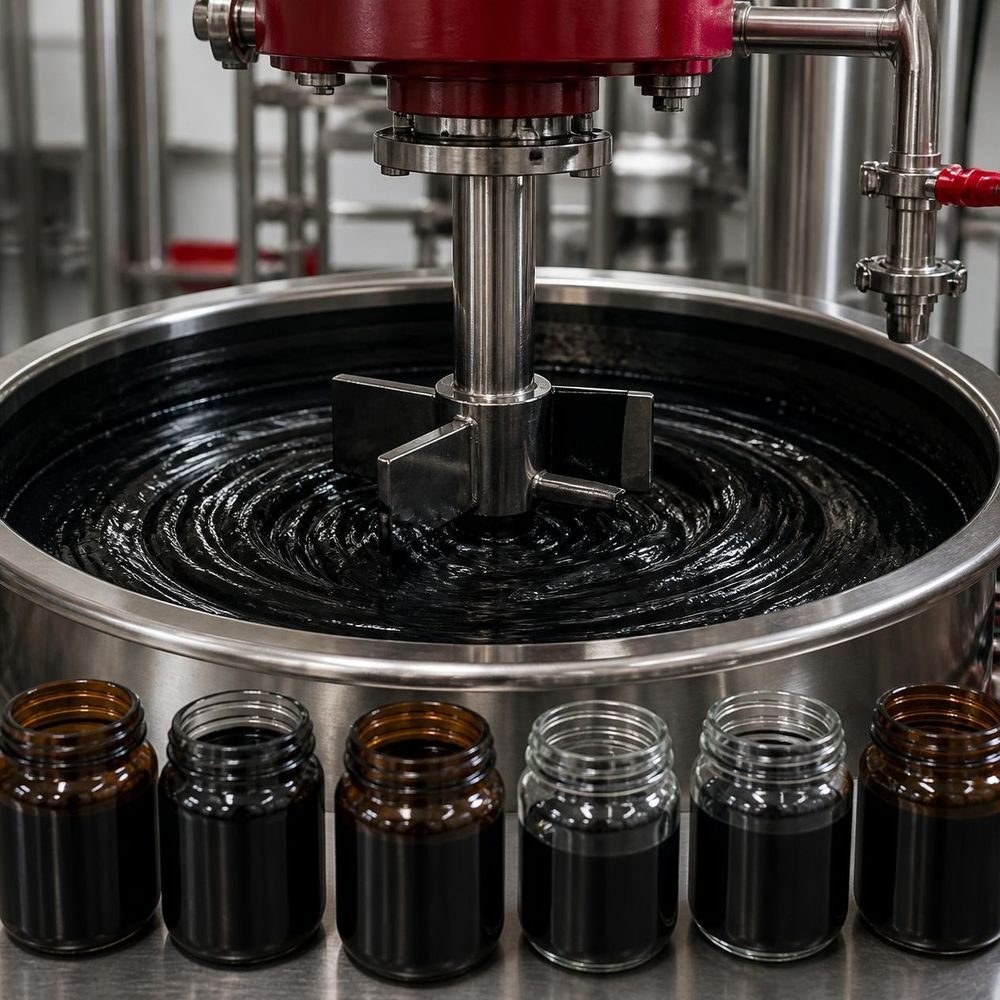
Adding a graphene additive can change your product's viscosity and processing because it adds both graphene sheets, which interact with the surrounding liquid, and the additive's carrier, which changes the formula's balance. Effects are usually larger at higher doses. Measure viscosity, flow and cure at each dose in your trial, and adjust the carrier balance so the comparison with your baseline is fair.
Processing is as important as performance. A graphene product that improves a property but cannot be pumped, sprayed or mixed in production does not solve the problem.
Why does graphene change viscosity?
Thin sheets with large surface area interact with the liquid around them and with each other. As the dose rises, sheets can form a loose network that increases viscosity, especially at low shear, and can make a product more shear-thinning. Well-dispersed graphene behaves more predictably than clumped material, which is one reason we supply graphene pre-dispersed. See what is a graphene dispersion.
How does the carrier affect the formula?
Every additive brings its carrier with it. In a lubricant, that is part of the oil; for our lubricant additives, the carrier is graphene integrated into oleic acid and monomer. In a waterborne coating or concrete, it adds water. In a resin system, it adds resin. Adjust the matching component in your formula so the solids, water or base oil content matches your baseline. See choosing a graphene dispersion carrier.
What should I measure in coatings and resins?
- Viscosity at low and high shear, at your application temperature.
- Sag and leveling for coatings.
- Pot life and cure for two-component systems.
- Spray or roll behavior on your real equipment.
- Appearance: streaks, specks or settling.
Our graphene paint additive guide and epoxy adhesive guide cover product-specific checks.
What should I measure in lubricants?
Check kinematic viscosity to confirm the grade, plus foam, filterability and storage stability. Our lubricant additives are dosed at 1% to 7%; at higher doses, compensate for the carrier with base oil if needed. See lubricant additive compatibility.
What should I measure in concrete?
In concrete, the additive's water and its effect on the paste can change workability. Measure slump or workability and air content, and adjust batch water to account for the additive's water. Our concrete additive is validated at 5% by weight of cement (loading depends on mix design; see TDS), where it gave +67.7% compressive strength in independent third-party testing (2023). See graphene concrete mix design.
What about plastics and melt processing?
In compounding, graphene can raise melt viscosity and change torque, pressure and output. Record those on every run along with mechanical results. Our graphene plastic additive for compounders guide explains how to introduce a resin-based concentrate.
How do I keep mixing consistent?
Shake or stir the container before use. Add the additive at the point we recommend and mix until uniform, for at least as long as your normal process. Our additives are pre-mixed, so they do not need special equipment, but they do need to be mixed in fully. Inconsistent mixing is a common cause of variable results. See dispersion stability, storage and remixing.
How do I balance performance and processing?
Run a dose ladder and plot both the performance property and the processing property against dose. The best dose is often the lowest one that delivers most of the performance gain while keeping processing within your limits. Our dosing guide and trial guide explain how.
Frequently asked questions
Will graphene thicken my product?
It can, especially at higher doses. Measure viscosity at each dose.
Can I reduce viscosity after adding graphene?
Adjusting the carrier balance or dose often helps. Talk to us before adding other components.
Does graphene settle during storage?
Our products are formulated to stay stably suspended, but follow the storage instructions and mix before use.
Do I need special mixing equipment?
No. Mix until uniform with your normal equipment.
Request a quote, samples or a spec sheet
Tell us your material, the property you want to improve, the carrier you use (water, solvent, resin or oil) and your volumes. Pricing and samples are by quote. Call 704-659-3682 or request a quote, samples or a spec sheet / SDS.


