
Press release
Pre-dispersed in a resin or solvent carrier, the additive is designed for epoxy, polyurethane and acrylic systems.
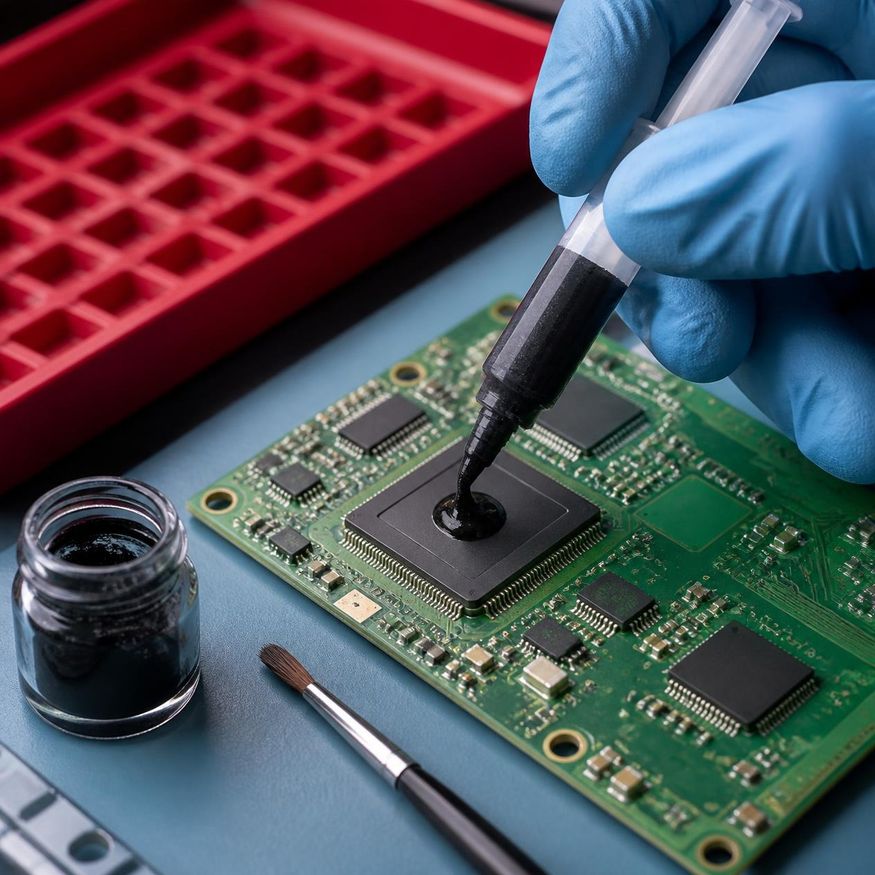
CHARLOTTE, NC — October 23, 2026 — Graphene Integrations today released its Graphene Adhesive Additive for adhesives, sealants and potting compounds. The graphene is pre-dispersed in a resin or solvent carrier matched to the adhesive system, including epoxy, polyurethane and acrylic chemistries.
Strength and heat, in the bond line
Graphene is known for its mechanical strength and its ability to conduct heat. In adhesives, that makes it a candidate for structural bonds that need extra toughness and for potting compounds that need to move heat away from electronics. The Graphene Adhesive Additive is designed to help formulators test both ideas in products they already make. Graphene Integrations is not publishing performance numbers for adhesives; each trial is run against the customer's baseline bond.
“An adhesive is only as good as the joint it holds together. We've made graphene easy to mix into epoxies and urethanes, and the only claims we'll make are the ones a customer's own lap-shear test backs up.”
Mix it in, then test
Formulators add the additive to the adhesive or sealant system at 1% to 7% by weight, depending on the job, and mix until uniform. Because the graphene is already dispersed, there is no dry powder to wet out. Lap-shear, peel and thermal tests in the customer's own lab then show whether it earns a place in the formula.
Availability
The additive comes in 32 fl oz bottles, 1 gallon jugs and 5 gallon pails, with bulk on request. A technical data sheet is available. It is patent pending, made in the USA and contains no carbon black.
Request a quote Learn about graphene in resins and composites →
About Graphene Integrations
Graphene Integrations is a US graphene manufacturer in Charlotte, NC, making graphene-enhanced additives for coolants, lubricants, concrete and coatings. The company makes graphene and supplies it pre-mixed in water, solvents, resins and oils, never as a dry powder, so manufacturers can add it to products and processes they already run. Its products are patent pending and made in the USA. Learn more about Graphene Integrations.
Media contact
Frans Alkemade
CEO, Graphene Integrations
sales@grapheneintegrations.com
+1 (704) 659-3682
###
Evaluate the joint, not just the additive
Graphene can be investigated for stress transfer and thermal or electrical pathways in polymer systems. Published epoxy research highlights the importance of the filler–matrix interface; its modified graphitic materials and results are not specifications for GI adhesive formulations.
Match the supplied carrier and dose to your resin chemistry. Hold the bond-line thickness, substrate preparation and cure conditions constant while comparing lap shear, peel or fracture behavior, pot life and thermal cycling. Check whether the carrier affects cure stoichiometry or application viscosity.
A resource-efficient joint must deliver the required function over its service duty. Record actual adhesive use, process scrap, cure energy, repair needs and disassembly or recycling constraints. Include additive and carrier impacts in any lifecycle comparison; a stronger coupon alone does not establish longer field life or a CO₂ reduction.
Research / measurement reference · Continue with the application guide