


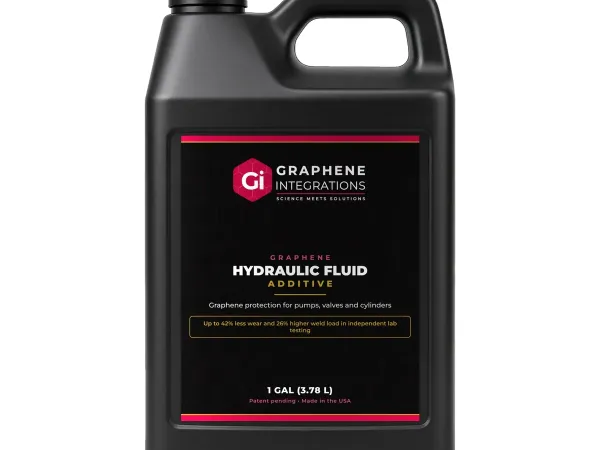
Graphene Hydraulic Fluid Additive
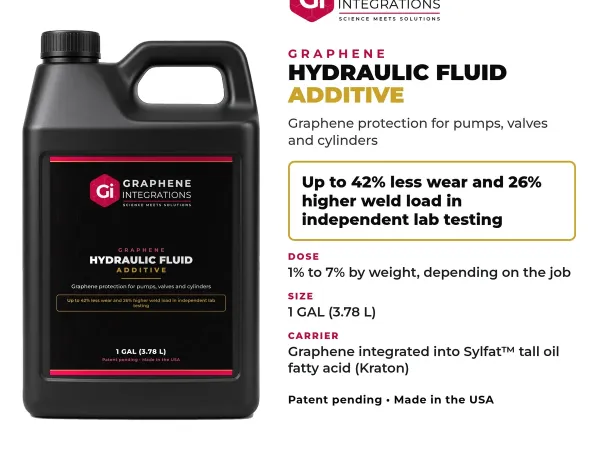
A graphene additive for hydraulic fluids, pre-mixed in an oil-based carrier for pumps, valves and cylinders.
- Category
- Lubricant & Fluid Additives
- Application
- Mineral-oil hydraulic fluids in mobile and industrial equipment. Blend into the fluid and test against your baseline in your system.
- Carrier
- Oil-based: graphene integrated into oleic acid and monomer. Other base oils on request.
- Typical dose
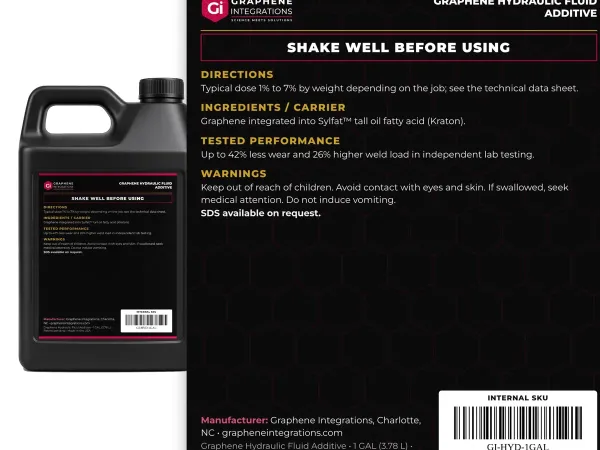
- Supplied-additive treat guidance: 1–7% by weight; confirm the formulation and dosing basis with GI. Not neat-graphene content.
- SKU
- GI-HYD-1GAL (1 gal jug)
GI-HYD-5GAL (5 gal pail)
Sizes: 1 gal jug, 5 gal pail
Request a quote for pricing, lead time and the right dose for your job.
Downloads
Patent pending. Made in the USA. Manufacturer: Graphene Integrations, Charlotte, NC.
About this additive
Hydraulic pumps, valves and cylinders depend on the fluid to protect closely fitted metal parts. Graphene layers can help the fluid keep those surfaces apart under load.
In independent lab testing, our graphene lubricant additive gave up to 42% smaller four-ball wear-scar diameter and 26% higher weld load. See our graphene lubricant additive page for how the results were measured. Hydraulic fluids also have to meet filtration, cleanliness and seal-compatibility requirements, so we evaluate the additive in your fluid and system.
Translate bench protection into a formulation trial
GI’s lubricant additives use graphene integrated into oleic acid and monomer. The 1–7% by-weight treat-rate guidance concerns the supplied additive; agree the dosing basis and carrier for your formulation rather than treating it as neat-graphene content.
Independent four-ball lab testing found up to 42% smaller wear-scar diameter and 26% higher weld load in the tested carrier-fluid blends. These are useful anti-wear and extreme-pressure results, not a measured reduction in engine friction, fuel consumption or maintenance. They do not validate every finished oil or grease.
Compare the finished formulation with its own baseline: viscosity, additive-package compatibility, oxidation, filtration and the relevant wear/load tests. For grease, also check thickener compatibility and consistency; for hydraulics, check air release and pump behavior. Demonstrate any resource benefit with actual oil consumption, replacement parts, drain intervals and energy under matched duty, including additive production and end-of-life in the environmental balance.
Research / measurement reference · Continue with the application guide
Frequently asked questions
What results can you share for hydraulic use?
Our published numbers are for our graphene lubricant additive: up to 42% smaller four-ball wear-scar diameter and 26% higher weld load in independent lab testing. We evaluate hydraulic performance in your fluid and system.
Will it affect filters or seals?
Filtration and seal compatibility depend on your fluid and equipment, which is why we test in your system before recommending use.
Is the graphene supplied as a powder?
No. It is supplied pre-mixed in an oil-based carrier, never as dry powder.
How much should I add?
Typical dose: 1–7% by weight, depending on the application. See the technical data sheet. Contact us for a starting treat rate.
More in Lubricant & Fluid Additives
-

Graphene Motor Oil Additive
A graphene additive for motor oils, supplied pre-mixed in an oil-based carrier so it blends straight into your oil. View product -

Graphene Gear Oil Additive
A graphene additive for gear oils, pre-mixed in an oil-based carrier for heavily loaded gear contacts. View product -

Graphene Grease Additive
A graphene additive for greases, pre-mixed in an oil-based carrier for blending into bearing and industrial greases. View product -

Graphene Coolant Additive
A graphene additive for liquid cooling loops, supplied pre-mixed in a water-based carrier. View product -

Graphene Concrete Additive
A graphene concentrate for concrete, supplied ready to add so it fits into existing batching and mixing. View product -

Graphene Plastic Additive
A graphene additive for plastics, supplied pre-dispersed in resin for compounding. View product