
Press release
Composites developed with a U.S. Department of Defense (DoD) contractor were evaluated with V50 ballistic testing at NTS Chesapeake in Belcamp, MD.
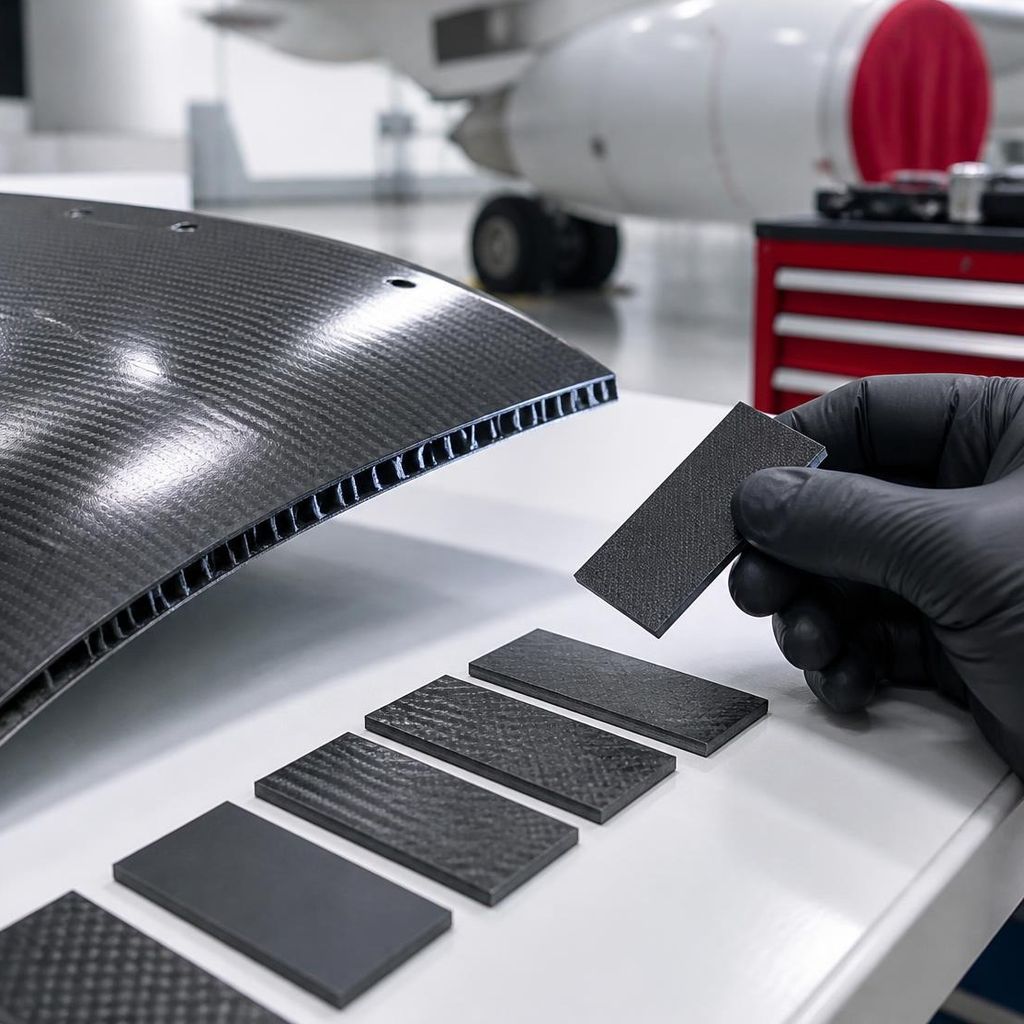
CHARLOTTE, NC — October 1, 2023 — Graphene Integrations, working with a U.S. Department of Defense (DoD) contractor, has developed graphene-integrated polymers and composites for aerospace and armor applications. The composites were evaluated with V50 ballistic testing at the NTS Chesapeake (Belcamp, MD) Ballistic and Materials Testing Facility.
Graphene in the resin
Graphene is added to the polymer resin and is designed to improve the mechanical properties of the composite. Possible applications under evaluation include structural aerospace components and protective armor. Aerospace use requires qualification program by program, and that work is ongoing.
“Graphene works best when it is integrated into a material that is already proven. Our work with a DoD contractor and the V50 testing at NTS Chesapeake give us a measured basis for developing these composites further with aerospace and defense partners.”
What V50 testing measures
V50 is the impact velocity at which a projectile is expected to defeat a given armor material about half the time. It is a standard way to compare armor materials and composite panels, which is why it was used to evaluate these composites.
How the graphene is supplied
Graphene Integrations disperses graphene into the polymer resin used in the composite, so it arrives already mixed in the carrier. Graphene is sold only pre-dispersed, never as dry flake or powder.
What is not claimed
Graphene Integrations has not published V50 numbers for these composites and makes no claims about protection levels. Armor products must be tested and certified to the standards that apply before use, such as NIJ standards for body armor in the US, and this work is at the development stage.
See graphene in commercial aerospace, graphene armor composites, the DoD contractor page and graphene dispersions in resins.
Request a quote Learn about graphene in aerospace →
About Graphene Integrations
Graphene Integrations is a US graphene manufacturer in Charlotte, NC, making graphene-enhanced additives for coolants, lubricants, concrete and coatings. The company makes graphene and supplies it pre-mixed in water, solvents, resins and oils, never as a dry powder, so manufacturers can add it to products and processes they already run. Its products are patent pending and made in the USA. Learn more about Graphene Integrations.
Media contact
Frans Alkemade
CEO, Graphene Integrations
sales@grapheneintegrations.com
+1 (704) 659-3682
###
Match material performance before claiming material efficiency
Graphene offers a route to investigate reinforcement and thermal or electrical networks in a polymer. Primary epoxy research shows how matrix interaction and filler structure affect performance; different grades, polymers and processing cannot be assumed to reproduce those results.
Select the supplied-additive dose for the actual resin and process. Compare equivalent parts or coupons using the same conditioning, geometry and test direction, recording dispersion, viscosity, cure or melt behavior and relevant mechanical properties. A structural or armor application still needs its own qualification.
Potential material efficiency requires a design that meets the same requirements—not simply a stronger coupon. Track accepted-part mass, production yield, processing energy and repair or replacement, then include additive, carrier, transport and end-of-life. Improved material properties alone do not establish lightweighting, recyclability or a measured GI carbon saving.
Research / measurement reference · Continue with the application guide