
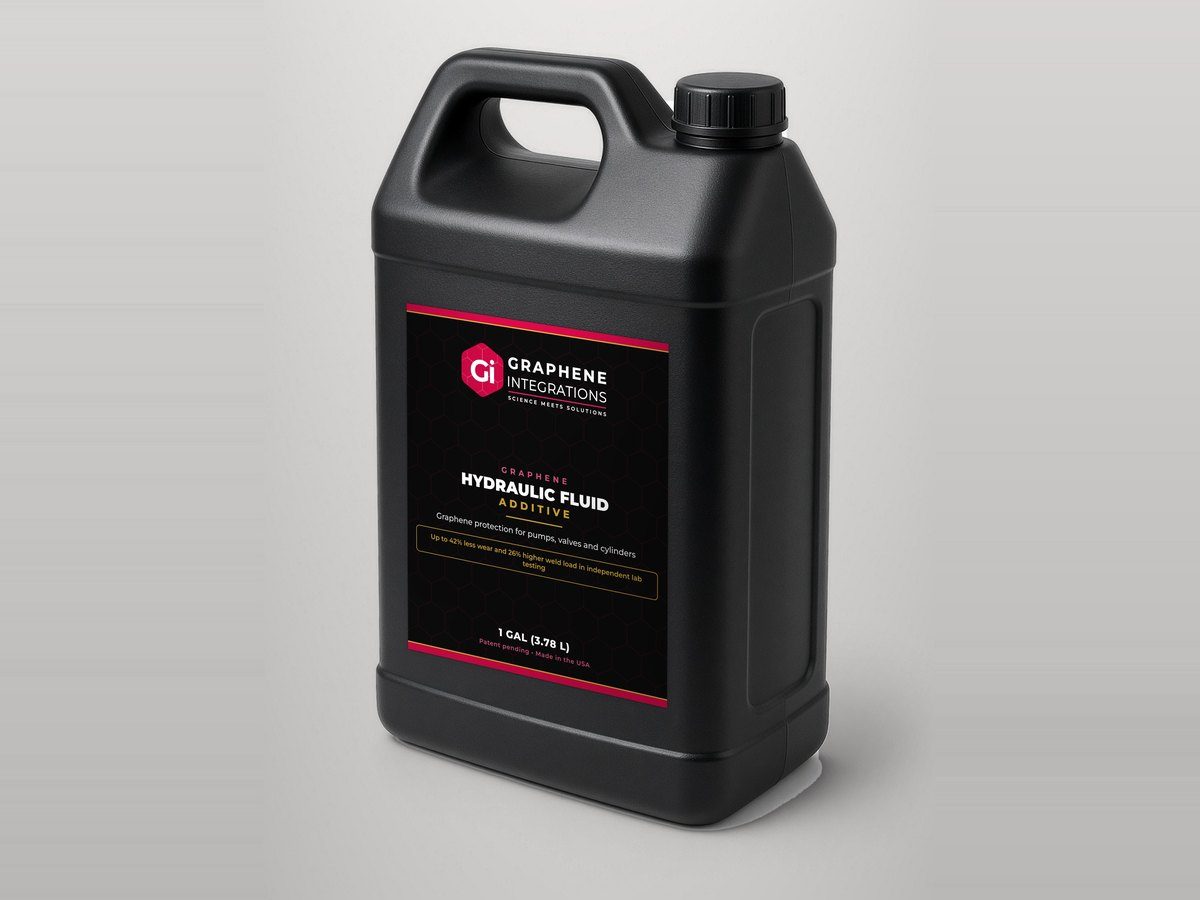
Most hydraulic fluid sold today is an anti-wear (AW) fluid. Pumps, valves and motors run with tight clearances and heavy loads, and the fluid has to protect those surfaces every time the system starts, stalls or hits relief pressure. This article explains how anti-wear additives work in hydraulic fluids, where a graphene additive fits, what our lab results mean, and how a fluid maker or fleet should test it.
Why hydraulic systems need anti-wear protection
A hydraulic pump is a set of precisely fitted parts moving against each other under pressure. Vane tips slide on a cam ring, gear teeth mesh and seal against housings, and piston shoes slide on swash plates. Most of the time a fluid film keeps them apart. At start-up, under shock loads or when the fluid is hot and thin, the film can break down and metal touches metal. That is when wear happens, and wear in a pump means lost efficiency, more heat and eventually failure.
Conventional AW fluids rely on additives, most often zinc-based (ZDDP) chemistry, that form a protective film on metal surfaces. Some systems use zinc-free or ashless chemistry instead. Either way, the anti-wear package is one of the main things that separates a hydraulic fluid from a plain base oil.
Where graphene fits
Graphene is a sheet of carbon one atom thick. Layers slide over each other with little force, and very thin layers can sit in a contact zone between loaded surfaces. The idea is a physical layer that helps keep surfaces apart in boundary conditions, alongside the chemical film from the AW package. It is an addition to a good fluid, not a fix for a poor one.
What the lab test showed
Our Graphene Hydraulic Fluid Additive uses the same chemistry as our graphene lubricant additive. In independent testing at Univar's Houston lab, that additive delivered up to 42% less wear and a 26% higher weld load compared with the lubricant without graphene.
The wear result comes from a four-ball style test, of the kind standardised for lubricating fluids in ASTM D4172, where a smaller wear scar on the steel balls means better protection. These are lab results for the lubricant additive. They are not field results in a hydraulic system, and we do not claim a specific pump life or drain interval.
What the additive is
- Carrier: graphene integrated into oleic acid and monomer, pre-mixed and ready to blend.
- Fluids: mineral-oil hydraulic fluids for mobile and industrial equipment.
- Dose: 1% to 7% by weight, depending on the job.
- Status: patent pending, made in the USA in Charlotte, NC, no carbon black, never sold as a powder.
Cleanliness comes first
Hydraulic people know that contamination, not chemistry, is the biggest cause of component wear. Any additive trial has to respect that. Measure fluid cleanliness before and after the trial with the same method you use today, normally an ISO code under ISO 4406. Keep your normal filters in place, and check filter differential pressure during the trial. If the fluid is not clean to begin with, fix that first; no additive will compensate for dirt.
How to trial it
- Choose the system or the bench. Fluid blenders usually start with bench tests on a current product. Fleets and plants usually start with one machine that has good service records.
- Record a baseline. Bench: four-ball wear and EP on the untreated fluid. Machine: oil analysis (wear metals, viscosity, water, ISO cleanliness code), operating temperature and any pump case drain flow data you have.
- Blend. Shake the additive, weigh the dose within 1% to 7%, and blend into the fluid until uniform. For a machine trial, blend into fresh fluid rather than adding to the tank.
- Check compatibility. Confirm appearance, viscosity, foam and water separation behave as expected, and that the fluid is compatible with your seal materials.
- Run and sample. Use the same oil analysis schedule as your baseline, and compare like for like.
What we do not claim
We do not publish pump life, efficiency, temperature or drain interval claims for the hydraulic additive, and we have no customer case studies to share yet. Our published numbers are the bench results above, and they belong to the lubricant additive the hydraulic product is based on. Your system and your fluid will decide the rest.
Related reading
For the full story on the test programme, read graphene lubricant additive: wear and weld load tests. For other lubricant products, see our guides to the gear oil additive and graphene grease.
Read the hydraulic fluid additive press release, or request a quote and samples.
Frequently asked questions
What does an anti-wear hydraulic additive do?
It helps protect pumps, valves and motors when the fluid film thins at start-up, under shock load or at high temperature, by keeping metal surfaces from touching.
What results has the graphene additive shown?
The lubricant additive it is based on gave up to 42% less wear and a 26% higher weld load than the lubricant without graphene, in independent testing at Univar's Houston lab.
Will it clog my filters?
The graphene is pre-dispersed. Keep normal filtration in place, watch filter differential pressure and check ISO cleanliness codes during any trial.
Can I add it to the tank of a running machine?
For a clean comparison, blend it into fresh fluid at 1% to 7% by weight and change the fluid, rather than topping up the tank.
Request a quote, samples or a spec sheet
Tell us your material, the property you want to improve, the carrier you use (water, solvent, resin or oil) and your volumes. Pricing and samples are by quote. Call 704-659-3682 or request a quote, samples or a spec sheet / SDS.


