
Most Graphene Integrations additives are dosed at 1% to 7% by weight of the supplied additive, depending on the job. Start near the rate we suggest for your application, then test two or three levels around it, such as a low, middle and high dose, so you can see whether the effect grows with dose. Concrete is the exception: our concrete additive is validated at 5% by weight of cement, and ThermaGraph™ coolants are complete fills rather than doses.
Dose is the single biggest lever in a graphene trial, and it is also the most common source of confusion.
What does "1% to 7% by weight" mean?
It means the weight of the supplied additive, the graphene dispersion as it comes in the container, as a percentage of your formulation's weight. It is not the percentage of pure graphene. The additive includes its carrier, so a 3% dose adds 3% additive, part of which is carrier. When you change the dose, account for the carrier in your formula, for example by adjusting the matching base oil, resin or water.
How do I choose a starting dose?
- Tell us the application. Lubricants, coatings, plastics, rubber and adhesives each have a typical starting point, stated on the product's TDS.
- Consider the property. Some effects appear at low dose; others need a connected network and a higher dose.
- Consider processing. Higher doses can change viscosity, cure or flow.
- Start in the middle of the range we suggest and bracket it.
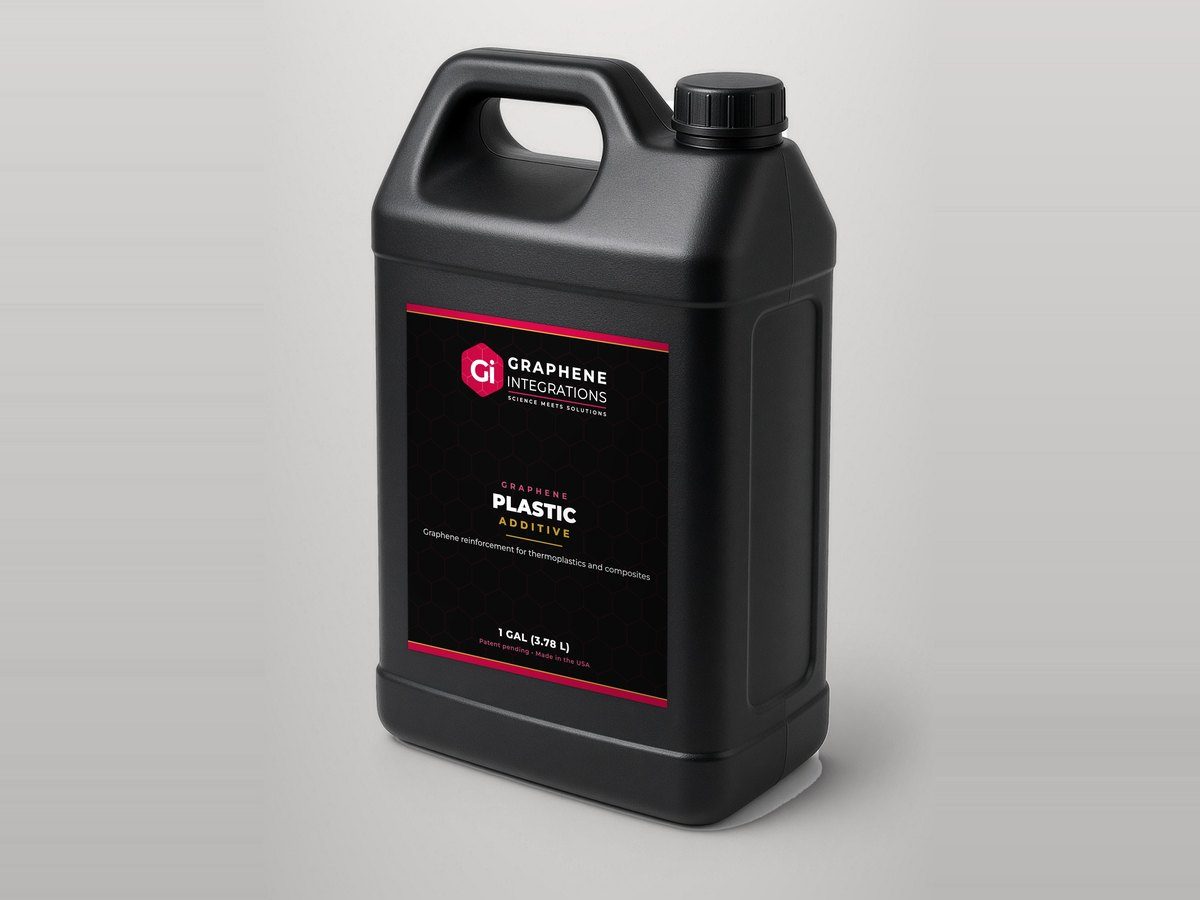
Product pages such as the motor oil additive, paint additive and plastic additive list typical doses.
Why test more than one dose?
One dose tells you whether that dose works. Several doses show a trend. If the property improves from the low to the middle dose and levels off at the high dose, you have found a practical range. If nothing changes at any dose, check dispersion, carrier match and the test method before concluding. Read how to run a graphene additive trial.
How is concrete dosed?
Our concrete additive, NanoTechCrete, is validated at 5% by weight of cement; loading depends on mix design, see the TDS. At that dose it gave +67.7% compressive strength in independent third-party testing (2023). The 5% refers to supplied additive mass relative to cement mass, not total concrete mass and not pure graphene. Account for the additive's water in the batch; see graphene concrete mix design.
How are ThermaGraph coolants dosed?
They are not dosed. ThermaGraph™ is a complete water-based fill with 0.5–1.5 wt% graphene stated on the COA, not a top-off. ThermaGraph-D™ is a complete white-mineral-oil immersion fill with 0.05–0.20 wt% graphene. Our coolant additive is the product for adding graphene to a water-based loop.
How are lubricant additives dosed?
Our lubricant additives are graphene integrated into oleic acid and monomer, dosed at 1% to 7%. In independent lab testing, our lubricant additive gave up to 42% smaller four-ball wear-scar diameter and 26% higher weld load. See the graphene lubricant additive page and our gear oil and hydraulic fluid guides.
What is a simple dose ladder?
| Batch | Additive dose (by weight) |
|---|---|
| Baseline | 0% |
| Low | Bottom of the suggested range |
| Middle | Suggested starting dose |
| High | Top of the suggested range |
Make all batches the same day, with the same raw material lots, and test them together.
Frequently asked questions
Is the dose the amount of pure graphene?
No. It is the weight of the supplied additive, including its carrier.
Can I go above 7%?
Talk to us first. Higher doses can change processing, and the right range depends on the application.
Why is concrete dosed by cement weight?
Cement is the reactive binder, so admixture doses in concrete are normally expressed relative to cement. Our result is tied to 5% by weight of cement.
Do I top up ThermaGraph?
No. ThermaGraph is a complete fill, not a top-off.
Request a quote, samples or a spec sheet
Tell us your material, the property you want to improve, the carrier you use (water, solvent, resin or oil) and your volumes. Pricing and samples are by quote. Call 704-659-3682 or request a quote, samples or a spec sheet / SDS.


