
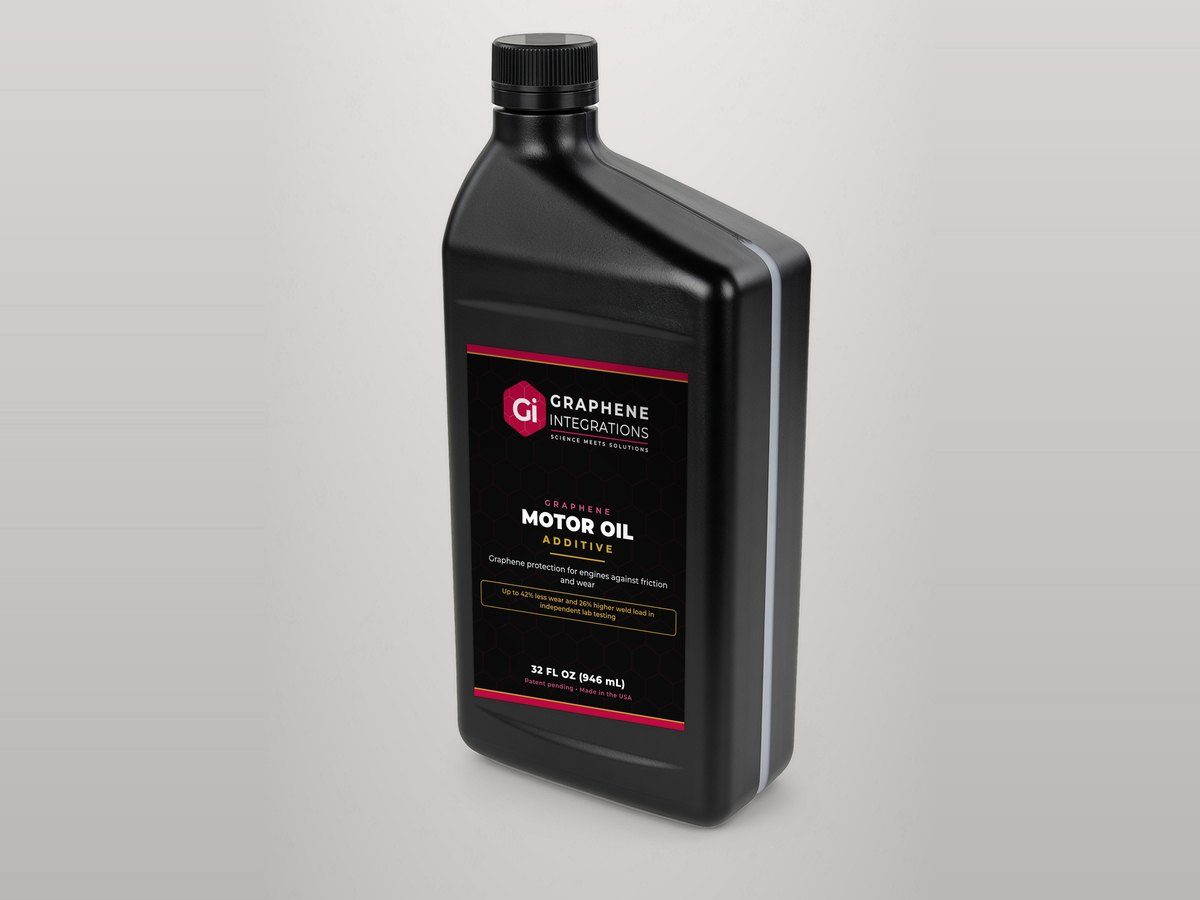
A graphene lubricant additive can work alongside a conventional additive package, but compatibility has to be confirmed in your own oil. Blend the additive at two or three doses into your finished formulation, then check appearance and storage stability, filterability, foam, viscosity, and the wear and extreme-pressure tests you already use, against the same oil without graphene.
Our lubricant additives are graphene integrated into oleic acid and monomer, dosed at 1% to 7%, supplied pre-mixed so they blend straight into oil.
Why does compatibility matter?
Finished lubricants are carefully balanced. Detergents, dispersants, anti-wear and extreme-pressure additives, friction modifiers, viscosity modifiers, antioxidants and antifoams all compete for surfaces and can interact. Adding any new component, including graphene, can change that balance. A compatibility check catches problems such as haze, settling or foam before a field trial.
How do I check base oil compatibility?
Start with the base oil and carrier. Our lubricant additives use an oil-based carrier, graphene integrated into oleic acid and monomer, and other base oils are available on request. If your product uses an unusual base stock, such as certain synthetics or esters, tell us so we can suggest the right carrier. See our guide to choosing a dispersion carrier.
What should I test in the finished oil?
- Appearance and stability: store blends at room and elevated temperature and look for haze, separation or sediment over time.
- Viscosity: confirm the grade is unchanged, or adjust base oil to compensate for the carrier.
- Foam: run your normal foam test.
- Filterability: important for hydraulic fluids and systems with fine filters.
- Wear and extreme pressure: four-ball wear (ASTM D4172) and four-ball EP weld load (ASTM D2783) are common screening tests.
- Any specification tests your customers require.
Read what wear and weld load tests show for background.
What results have been measured?
In independent lab testing, our graphene lubricant additive gave up to 42% smaller four-ball wear-scar diameter and 26% higher weld load. Those results support a trial; they do not guarantee the same result in every formulation, because base oils and additive packages differ. See the graphene lubricant additive page and graphene vs graphite and MoS2.
How should the additive be blended?
Shake or stir the container before use. Add the additive at the point we recommend and mix until uniform, for at least as long as your normal blending cycle. Keep everything else the same between baseline and treated batches. Our motor oil, gear oil, hydraulic fluid and grease guides give product-specific details.
What problems should I look for?
- Sediment after storage, which may indicate a carrier mismatch or insufficient mixing.
- Increased foam, which may need an antifoam adjustment.
- Filter blocking in fine-filtration systems.
- Unexpected viscosity change.
If you see any of these, contact us before changing the dose. Often a carrier or mixing change solves it. Our dispersion stability guide also helps.
Which products are available?
Our store lists the motor oil additive, gear oil additive, hydraulic fluid additive, grease additive and the oil-based graphene dispersion. Pricing and samples are by quote.
How should I document a compatibility trial?
Record the base oil and additive package lots, the graphene additive lot and dose, blending temperature, mixing time and the order of addition. Keep retained samples of each blend and note storage conditions and dates. Good records make it possible to repeat a successful blend at pilot scale and to trace any later problem back to a specific variable.
Frequently asked questions
Do I need to remove part of my additive package?
Not as a starting point. Add graphene to your finished formulation and test. Any changes to the package should follow your data.
What dose should I start with?
Our lubricant additives are dosed at 1% to 7%, depending on the job. Test two or three levels.
Will graphene be removed by filters?
Check filterability in your system as part of the trial, especially with fine filters.
Is the additive a powder?
No. It is supplied pre-mixed in an oil-based carrier, never as dry powder.
Request a quote, samples or a spec sheet
Tell us your material, the property you want to improve, the carrier you use (water, solvent, resin or oil) and your volumes. Pricing and samples are by quote. Call 704-659-3682 or request a quote, samples or a spec sheet / SDS.


