
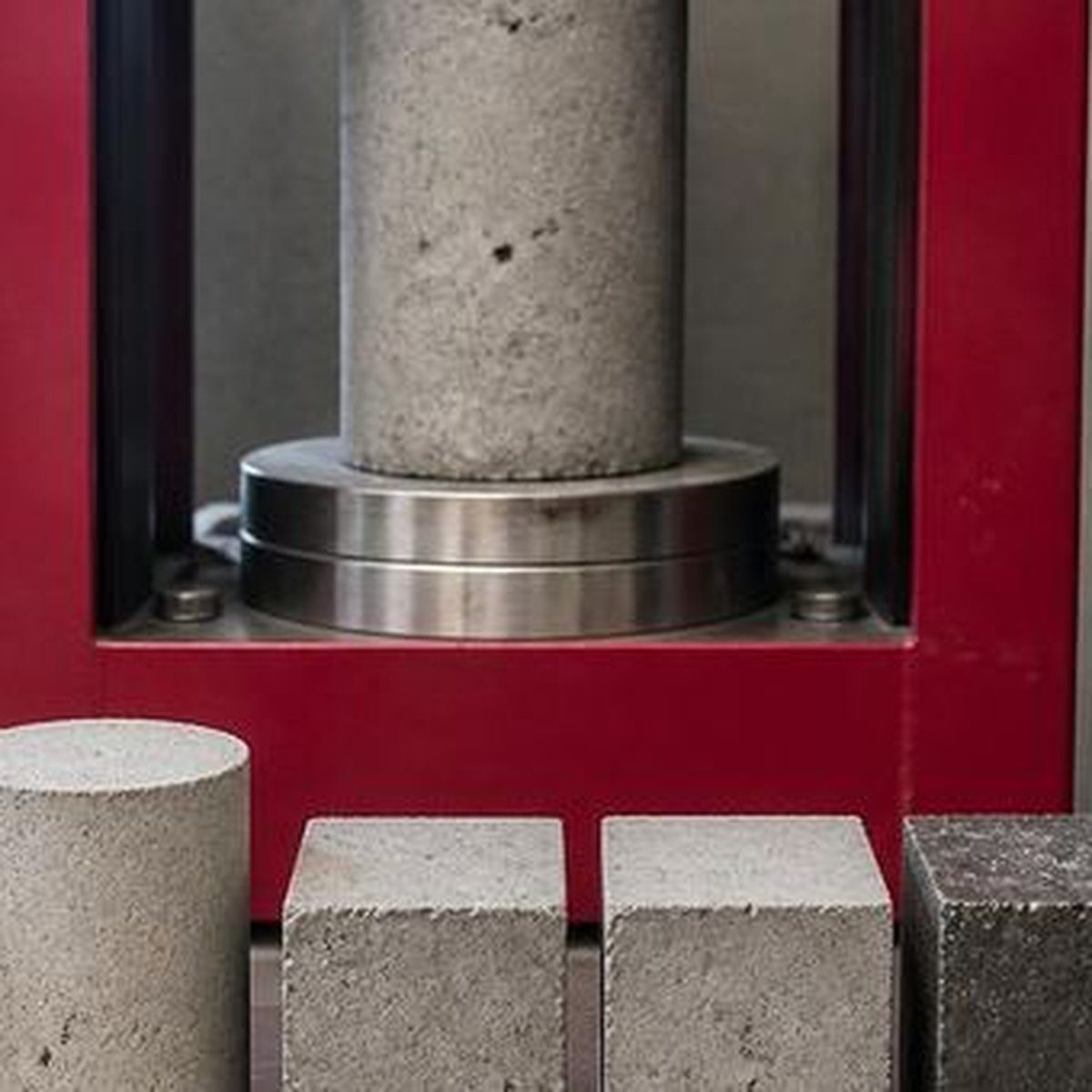
From a Charlotte plant floor to a Univar tribology bench, from a 2023 concrete cylinder to a closed-loop coolant skid, graphene only earns its keep inside someone else’s process. Two of the application families buyers ask about most often—concrete and lubricants—show how published science, measured product results, and open questions fit together in practice.
What to look for in a result
When you evaluate a graphene additive, separate three kinds of evidence: peer-reviewed or industry-review consensus, product results with methods and doses stated clearly, and questions that still need a trial in your own system. Prefer suppliers who publish methods alongside numbers.
Concrete and cementitious systems
The research literature is growing. Reviews such as Shamsaei et al. (2018) in Construction and Building Materials and Dimov et al. (2018) in Advanced Functional Materials survey graphene-family additions to cement and concrete, with dose definitions that vary wildly between graphene oxide solids and commercial concentrates (DOI 10.1016/j.conbuildmat.2018.06.201; DOI 10.1002/adfm.201705183). Durability beyond the cylinder age tested, freeze–thaw, and reinforcement corrosion in real exposures still have to be proven on your mix design.
For Graphene Integrations, the published concrete result is specific. Our liquid graphene concrete additive, dosed at 5% by weight of cement, gave a +67.7% gain in compressive strength and a +25% gain in water resistance in independent third-party testing in 2023. That percentage is tied to that dose and that test program. Read the write-up on our graphene concrete additive page and the concrete strength press release, and compare against your own baseline before you scale.
Lubricants: friction, wear, and weld load
Tribology literature covers graphene and related carbons as friction and wear modifiers. Berman, Erdemir, and Sumant’s 2014 review in Materials Today—“Graphene: a new emerging lubricant”—is a widely cited entry point (DOI 10.1016/j.mattod.2013.12.003). Translating bench weld loads into field drain intervals, filter life, and compatibility with an existing additive package still takes a plant trial.
Independent testing at Univar’s Houston lab found that a graphene lubricant additive carried in Sylfat™ tall oil fatty acid reduced wear by up to 42% and raised weld load by 26%. Typical dosing guidance for our lubricant additive is 1% to 7% by weight—bracket doses rather than assuming more is automatically better. Details: graphene lubricant additive and the lubricant test press release.
Why dispersion beats dry powder in both stories
Concrete and lubricants fail graphene for the same mechanical reason powders often fail everywhere else: flakes that clump act like defects. Graphene Integrations supplies graphene already dispersed in carriers matched to the job—never as dry powder—so plants can mix with equipment they already run. We make graphene by exfoliation and keep it in a proprietary suspension; see how we make graphene. Performance still has to be proven in your system.
Data-center coolants sit next door
Coolants are a related family. ThermaGraph closed-loop coolant uses 0.5% to 1.5% graphene loading, with heat-transfer gains of +6% to +18% from internal testing results. ThermaGraph-D immersion concentrate uses 0.05% to 0.20%. See data center coolants and our companion article on graphene and heat in data centers.
Consumer products and the rest of the map
Coatings, polymer composites, and energy-storage additives all appear in reviews with grade-specific success. On the finished-product side, Graphene Integrations worked with ITW’s engineering team on four graphene-enhanced car-care products for Black Magic and Rain-X brands—told on our ITW case study and case studies hub. CMOS-scale digital graphene largely did not follow the same commercialization path as additives, which is a useful reminder that “graphene” is not one product.
Safety and the SDS
For handling, storage and safety information, always refer to the product’s concrete additive SDS or lubricant additive SDS, and ask for the certificate of analysis that matches the lot.
What a fair trial looks like
Whether the host is cement paste or gear oil, a fair graphene trial changes one variable at a time. Keep the baseline formulation you already trust. Add the dispersion at two or three doses inside the published range. Run the tests your customers already use—compressive strength and absorption for concrete; wear scar and weld load for lubricants—and record mixing energy, temperature, and hold time. Our guide on how to run a graphene additive trial walks through that process in more detail.
Also ask how the graphene was made. Exfoliated few-layer grades, graphene oxide, and CVD films are not interchangeable, even when a catalog collapses them under one word. Our companion articles on the history of graphene and how graphene is made help purchasing conversations start with the right mental model before anyone opens a tote.
Graphene Integrations is based in Charlotte, NC, and works with engineers who need additives that survive real plants—not only laboratory headlines. Independent results are marked as such; internal testing results are labeled that way on the page.
Applications, dosing, and how to ask better supplier questions are covered in depth in the upcoming book Graphene by Frans Alkemade—coming soon to Amazon in paperback and Kindle. Related reading: how to run a graphene additive trial · industries · request samples.


