
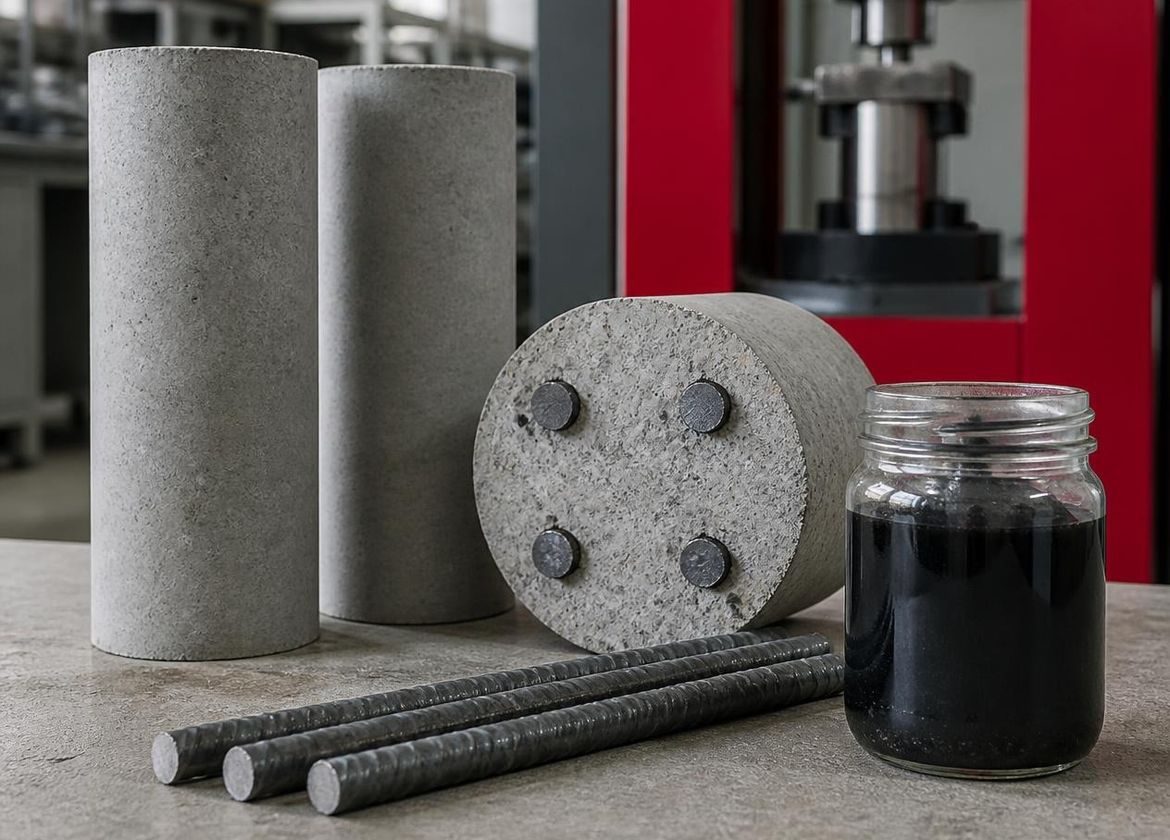
Graphene rebar is in development at Graphene Integrations. It is not a product you can buy, and it has not yet passed the testing and code approvals that structural reinforcement needs. This article explains why we are working on it, the problem it targets, the goals we have set, and what has to happen before anyone should put it in a structure.
The problem: steel corrodes
Steel rebar is excellent in tension and cheap, which is why it is everywhere. Its weakness is corrosion. Concrete normally protects steel with its high alkalinity, but chlorides from de-icing salts or seawater, and carbonation over time, break down that protection. Once steel starts to rust, the rust takes up more volume than the steel, cracking and spalling the concrete around it. The US Federal Highway Administration has documented the scale of corrosion damage to bridges and highway structures for decades; see for example its research on corrosion in reinforced concrete structures.
Engineers already use several ways to manage this: more concrete cover, lower-permeability concrete, epoxy-coated and galvanised bars, stainless steel and fibre-reinforced polymer bars. Each has trade-offs in cost, handling and design.
Why graphene composite rebar
Our approach is a composite bar that uses graphene in place of steel. The design goals are:
- No rust: a non-metallic bar cannot corrode the way steel does.
- Lighter than steel: easier to transport and handle on site.
- Works with graphene concrete: designed to pair with our NanoTechCrete concrete additive.
- Made in the USA: produced in Charlotte, NC, using graphene we make ourselves.
These are goals, not results. We are not publishing strength, stiffness or durability figures for the rebar while it is in development.
What has to happen before it is used
Reinforcement is structural. A bar that fails puts lives at risk, so the bar to entry is rightly high. Before graphene rebar could be specified, it must:
- Be characterised: tensile strength, modulus, bond to concrete, and behaviour under sustained load.
- Prove durability: long-term performance in alkaline concrete, moisture, temperature cycling and chlorides.
- Address design differences: non-metallic bars typically behave differently from steel. For example, they may not yield before failure, and they cannot simply be bent on site. Design methods must account for this.
- Pass the relevant standards and codes: independent testing to recognised methods and acceptance by the codes and authorities that govern the structure.
We will not offer it for sale until those steps are done.
Where it might fit first
If development succeeds, the most natural uses are places where corrosion is the main enemy:
- Marine and coastal structures, such as sea walls and docks.
- Bridge decks and parking structures exposed to de-icing salts.
- Precast elements where lighter reinforcement simplifies handling.
- Structures near sensitive equipment, where non-magnetic reinforcement can matter.
What you can use today
Our graphene concrete additive, NanoTechCrete, is available now. It is a liquid added at 5% by weight of cement. Independent third-party testing in 2023 showed a 67% increase in compressive strength, and it increases water resistance by 25%. Lower water penetration is relevant to corrosion, because water and dissolved chlorides are what reach steel. Read how the graphene concrete additive works and our guide to graphene concrete mix design.
"Rebar is structural, so it will take as long as it takes. We'll share results when they are independent and complete." — Frans Alkemade
Follow the project
How non-metallic reinforcement is used today
Non-metallic reinforcement is not a new idea. Glass, basalt and carbon fibre-reinforced polymer bars have been used for years in applications where corrosion is a concern, and design guidance exists for them. That experience tells us what engineers will expect from any new composite bar: clear material properties, a design method, durability data from recognised tests and a track record in pilot structures. Graphene composite rebar will be judged by the same standards, and we think that is the right approach.
What we are not saying
We are not saying graphene rebar is stronger than steel, that it will cost less, or that it is ready for any specific structure. Those are questions that testing will answer. If you see claims about our rebar that go beyond the goals on this page, they did not come from us.
Read the rebar development press release and the graphene rebar project page. If you are an engineer or owner interested in future pilot testing, get in touch.
Frequently asked questions
Can I buy graphene rebar?
No. Graphene rebar is in development and not for sale. It must pass testing and code approvals first.
Why develop graphene rebar?
Steel rebar corrodes, which cracks and spalls concrete. A non-metallic graphene composite bar is designed not to rust and to be lighter than steel.
Do you have strength results for the rebar?
We are not publishing rebar performance figures while it is in development.
What graphene product can I use in concrete today?
NanoTechCrete, a liquid graphene concrete additive dosed at 5% by weight of cement.
Is graphene rebar lighter than steel?
Being lighter than steel is one of our design goals. We are not publishing weight or strength figures while it is in development.
Request a quote, samples or a spec sheet
Tell us your material, the property you want to improve, the carrier you use (water, solvent, resin or oil) and your volumes. Pricing and samples are by quote. Call 704-659-3682 or request a quote, samples or a spec sheet / SDS.


