
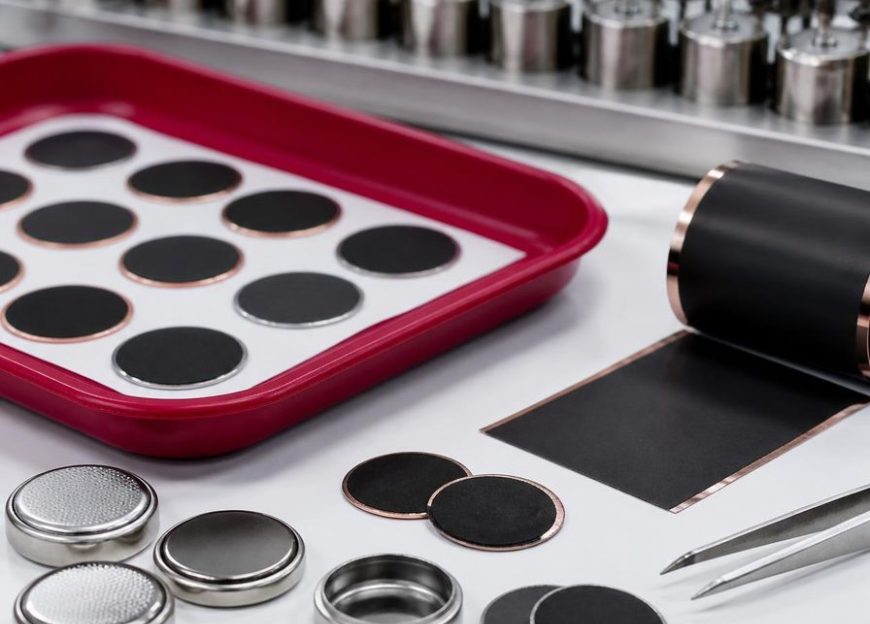
Graphene is one of the most researched materials for batteries and supercapacitors. We supply graphene already dispersed in water, solvents and resins, so battery and capacitor developers can test it in their own electrode formulations.
Why graphene is studied for energy storage
- Conductive additive in lithium-ion electrodes: a small amount of graphene can form a conductive network through an electrode. Research aims to use this for higher power, faster charging and longer cycle life.
- Supercapacitors: supercapacitors store charge on electrode surfaces, so graphene's very high surface area per gram makes it a strong candidate electrode material. Supercapacitors charge and discharge quickly but store less energy than batteries.
- Electrode durability: flexible graphene networks are being studied to help electrodes cope with the swelling and shrinking that happen during charging, for example in silicon-containing anodes.
- Thermal management: graphene's thermal conductivity is studied for spreading heat in battery packs.
What we can and can't claim today
We don't yet publish test data for graphene in batteries or supercapacitors. Results depend heavily on the cell chemistry, the graphene grade and how well it is dispersed, so every project starts with testing in your formulation.
Our verified results so far are in other materials: a 67% gain in concrete compressive strength at about a 1% dose in testing, up to 42% less wear and 26% higher weld load for a lubricant in independent testing at Univar's Houston lab, and four graphene car care products developed with ITW for Rain-X and Black Magic (ITW case study).
Work with us
If you are developing electrodes, contact us to discuss a graphene dispersion and starting dose for testing. Related reading: graphene in electronics and ThermaGraph™ data center coolants.