
Telecommunications equipment needs to move signals quickly, keep interference out and get rid of heat. Graphene's electrical, optical and thermal properties make it a research material for all three. We supply graphene already dispersed in water, solvents and resins, ready for coatings, inks and composites.
Where graphene is being researched in telecom
- EMI shielding: graphene coatings and filled polymers can block or absorb electromagnetic interference around electronics.
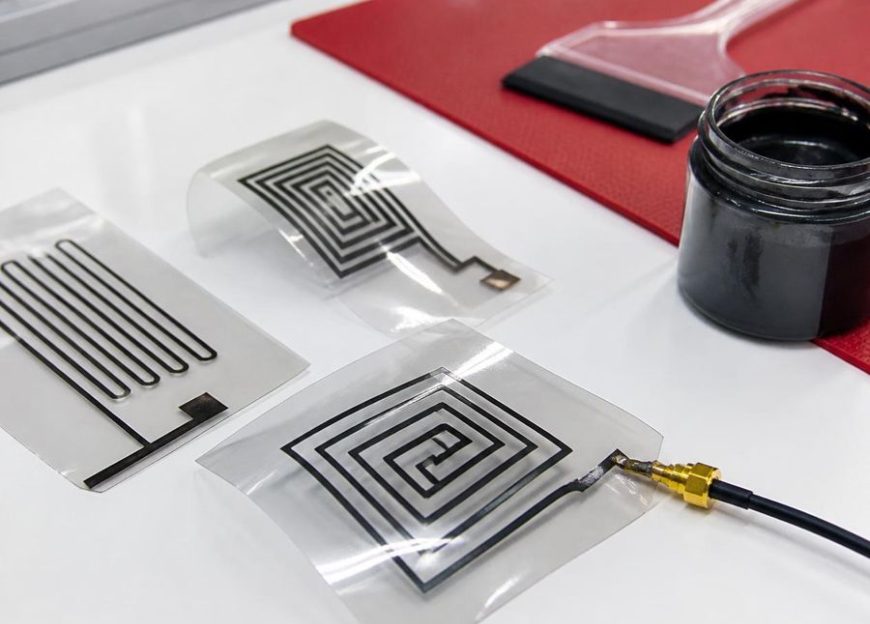
- Antennas: printed graphene inks are being developed for flexible antennas and RFID tags.
- Optical communications: graphene photodetectors and modulators are studied for fast fiber-optic links.
- Transparent conductive films: a possible alternative to indium tin oxide in touchscreens and displays.
- Sensors: graphene's sensitivity to small changes in its surroundings suits it to compact, low-power sensors.
- Thermal management: graphene films and fillers are used or tested to spread heat in electronics and network hardware.
Most of these are still in research or early development. We don't yet publish test data for graphene in telecom components; every application needs testing in the customer's own material and design.
Cooling network and data center hardware
For liquid-cooled hardware, our ThermaGraph™ coolant for indoor water loops showed a +6% to +18% higher convective heat transfer coefficient than a glycol baseline in internal pumped-loop lab tests. That is lab data, not field data. See ThermaGraph™ data center coolants.
Work with us
Contact us to test graphene in your coating, ink or composite. Related reading: graphene in electronics.