
Published · Updated
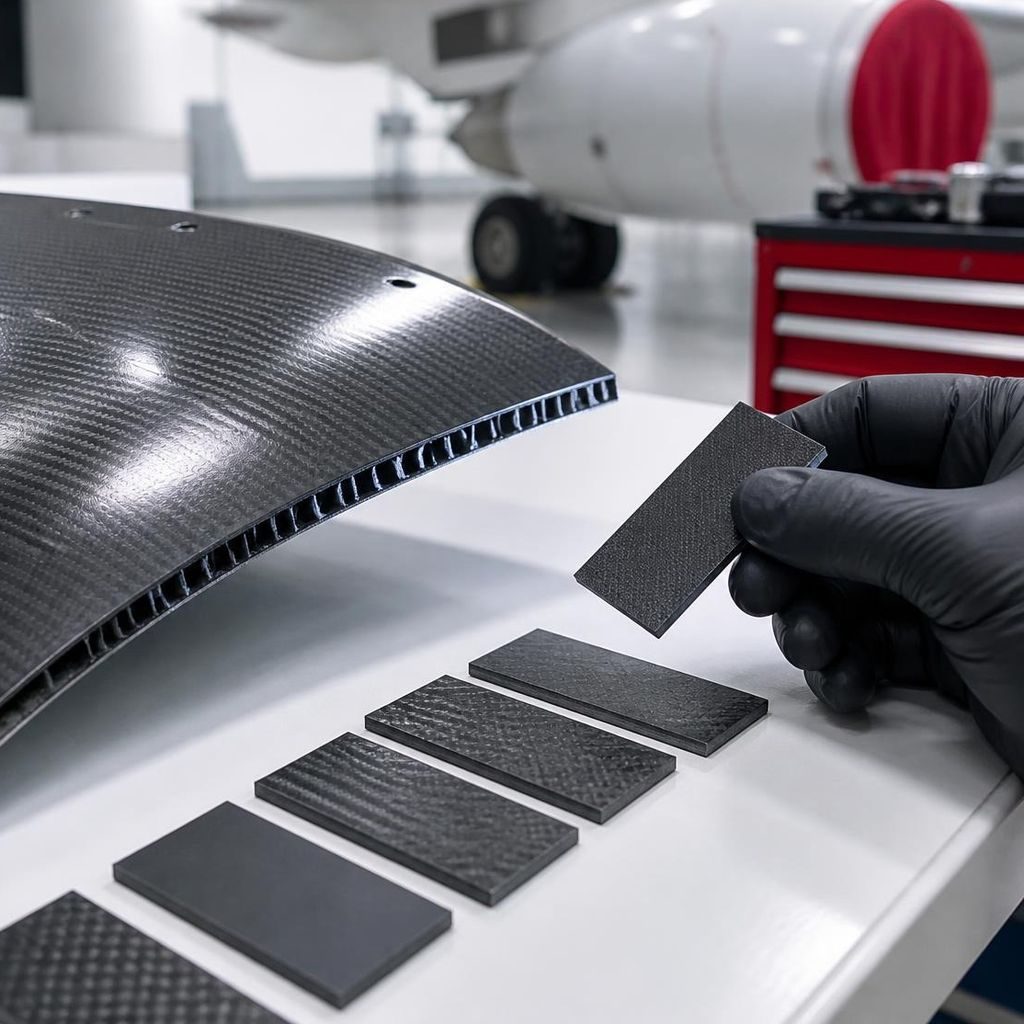
Aerospace is always trying to save weight without giving up strength, durability or safety. Graphene is studied as a small addition to the polymers and composites that aircraft already use.
Our aerospace polymer work
Working with Advanced Armor Research Group (AARG), we developed graphene-integrated polymers and composites. They were evaluated with V50 ballistic testing at the NTS Chesapeake ballistic and materials testing facility in Belcamp, MD. Read the aerospace polymers press release and see graphene in commercial aerospace.
Where graphene is being explored in aerospace
- Structural composites: graphene in resins and fiber-reinforced composites for stiffer, tougher parts, with the aim of reducing weight.
- Lightning strike and static protection: graphene's conductivity is studied for composite skins that need to carry current.
- De-icing: conductive graphene layers can act as thin, light heating elements on wings and surfaces.
- Coatings: for corrosion and wear protection.
- Thermal management: spreading heat in avionics and electronics.
Space and unmanned aircraft
The same properties make graphene a research material for spacecraft and drones. Saving weight matters even more in launch, and graphene's thermal conductivity is studied for spreading heat in satellite electronics. In 2016 the University of Central Lancashire flew Juno, an unmanned aircraft with a graphene-enhanced composite wing skin. Graphene membranes have also been tested as light-sail material in small drop-tower experiments. Bigger ideas, such as graphene cables for a space elevator, remain theoretical.
These are areas of industry research and development, not claims about certified aircraft parts. Aerospace materials go through long qualification programs before they fly.
For graphene in defense and armor, see graphene in the military. Contact us to test graphene in your composite, or see what else we make.


